Marine Paint Maintenance: How to Extend the Life of Your Vessel’s Coating
Marine Paint Maintenance: How to Extend the Life of Your Vessel’s Coating
Marine paint maintenance is an important part of protecting boats, ships and other marine structures from the demanding conditions associated with water, salt, sunlight, abrasion and changing weather. A coating system can provide important protection against corrosion and environmental exposure, but its condition needs to be monitored and maintained throughout the vessel’s service life.
Good maintenance does not simply mean washing the boat or touching up visible scratches. Effective marine coating maintenance involves regular inspection, cleaning, identification of coating defects, timely repairs, appropriate surface preparation and planned recoating when the existing system reaches the end of its useful service.
For commercial vessels, maintenance may also be coordinated with dry-docking schedules and other planned inspection activities. AMPP notes that continued useful service of ships depends on frequent application and inspection of protective coatings, with maintenance work often carried out during dry-docking. AMPP’s guidance on ship maintenance painting provides additional context.
Why Marine Paint Maintenance Matters
Marine coatings are exposed to conditions that can gradually affect their appearance and protective performance. Saltwater, moisture, ultraviolet exposure, mechanical impact, abrasion, chemicals and repeated cleaning can all contribute to coating deterioration depending on the location and coating system.
When coating damage is identified early, the affected area can often be addressed before corrosion or further coating breakdown spreads to a larger section of the substrate.
AMPP explains that regular inspection of protective coatings is important because inspections can reveal existing corrosion and coating problems that can then be repaired or monitored. :contentReference[oaicite:2]{index=2}
This is why marine paint maintenance should be treated as an ongoing process rather than something that only happens when a vessel is due for a complete repaint.
What Can Cause Marine Paint to Deteriorate?
The service life of a marine coating depends on the product, application quality, environment and maintenance conditions. Common causes of deterioration include:
- Continuous exposure to moisture and saltwater
- Ultraviolet exposure on exposed surfaces
- Mechanical impact and abrasion
- Improper surface preparation
- Incompatible coating layers
- Excessive or unsuitable cleaning
- Coating application outside the manufacturer’s requirements
- Corrosion beneath damaged coating
- Prolonged immersion or exposure beyond the product’s intended service conditions
Not every coating will respond to these conditions in the same way. Epoxy, polyurethane, zinc-rich, antifouling and other marine coating technologies have different properties and intended applications.
For example, our guide to epoxy marine paint explains why epoxy coatings are commonly used for corrosion protection while also discussing their limitations under prolonged UV exposure.
1. Inspect Marine Paint Regularly
Regular inspection is one of the most important parts of marine coating maintenance. Do not wait until large areas of paint have peeled away before checking the coating condition.
During an inspection, look for visible signs such as:
- Peeling or flaking paint
- Blistering
- Cracking
- Chalking
- Rust staining
- Corrosion around damaged areas
- Mechanical impact damage
- Exposed substrate
- Loss of gloss or colour on exposed finishes
- Damage around edges, welds and fittings
Inspection should also consider areas that are more difficult to see, including tanks, decks, hull appendages, niche areas and locations where water or contaminants may collect.
AMPP’s maritime resources include standards covering ship coating repair, dry-docking hull maintenance and underwater evaluation of hull fouling and antifouling-system condition. :contentReference[oaicite:3]{index=3}
2. Keep Marine-Coated Surfaces Clean
Regular cleaning can help remove salt deposits, dirt, marine growth and other contaminants from exposed surfaces. The cleaning method, however, should be appropriate for the coating.
Aggressive cleaning or unsuitable equipment can damage a coating that is otherwise in good condition. The cleaning procedure should therefore take into account the coating manufacturer’s recommendations and the condition of the existing surface.
For above-water painted surfaces, use cleaning methods that remove contamination without unnecessarily damaging the coating. Particular care should be taken around edges, damaged areas, fittings and previously repaired sections.
3. Do Not Ignore Small Scratches and Chips
A small scratch may look like a cosmetic problem, but damage that exposes the substrate can create an entry point for moisture and begin a larger coating problem.
This is particularly important on steel structures where corrosion can develop beneath or around damaged coating.
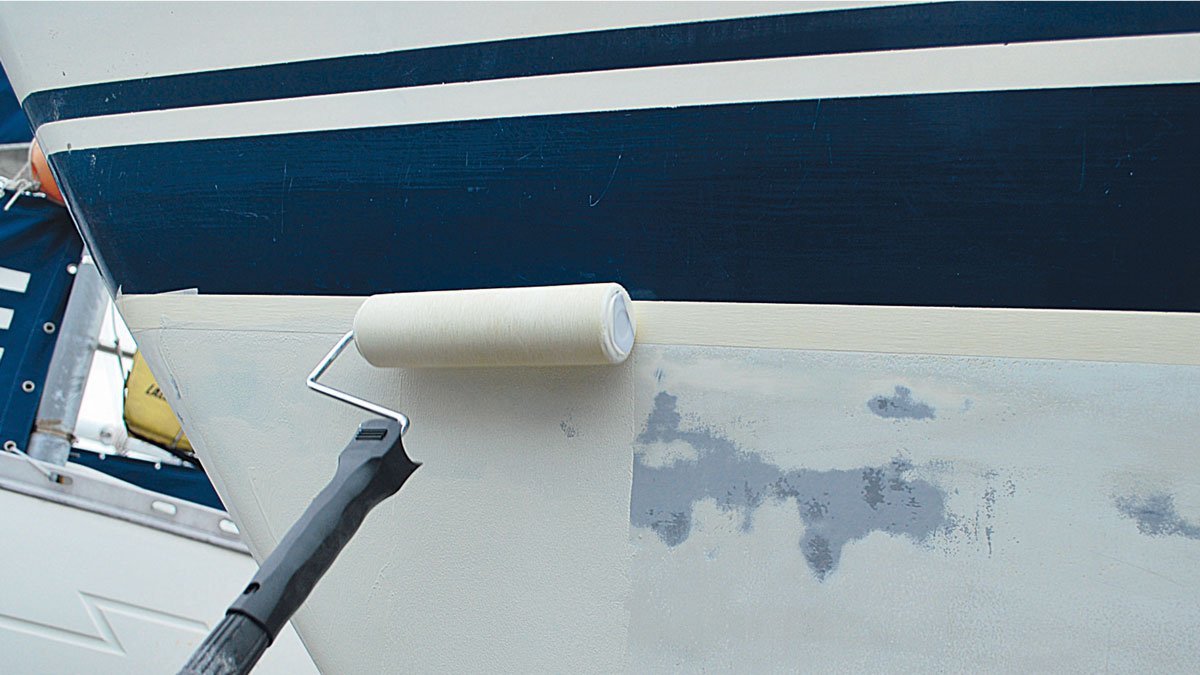
When damage is identified, the repair should not simply involve painting over the scratch. The damaged area may need to be cleaned, prepared and treated according to the coating manufacturer’s repair procedure.
For a broader explanation of corrosion in coastal environments, read our article on how to prevent corrosion on coastal steel structures in Nigeria.
4. Watch for Rust and Corrosion
Rust staining, bubbling or coating breakdown can indicate that corrosion is developing beneath or around the coating system.
Marine paint is not a substitute for proper corrosion control. The coating system, substrate preparation, application thickness and maintenance condition all contribute to corrosion protection.
Saltwater exposure can make corrosion control particularly important. Our guide on why saltwater accelerates corrosion in Nigeria’s marine environment explains the relationship between marine exposure and corrosion.
Where corrosion has already developed, simply applying another coat over the affected area may not address the underlying problem. The damaged coating and corrosion products may need to be removed and the substrate properly prepared before the specified repair coating is applied.
5. Check the Coating System, Not Just the Topcoat
A marine coating system can contain several layers, and visible damage to the final finish does not always tell the whole story.
Depending on the application, a system may include:
- Primer
- Anticorrosive coating
- Intermediate or build coat
- Tie coat where required
- Polyurethane or other finishing coat
- Antifouling coating for suitable underwater applications
Each layer has a particular function. An epoxy coating, for example, may provide barrier and corrosion protection, while a polyurethane finish may be selected for suitable above-water areas where colour and gloss retention are important.
Morven’s Painting and Protective Coating category includes different coating technologies from manufacturers such as PPG Sigma, International Paint, Hempel and Jotun.
6. Use the Correct Repair Coating
When repairing damaged marine paint, the replacement product should be compatible with the existing coating system and suitable for the intended service environment.
Do not select a repair product solely because its colour appears similar to the existing finish.
Before carrying out a repair, consider:
- Existing coating type
- Substrate material
- Location of the damaged area
- Atmospheric or immersion exposure
- Required corrosion protection
- Surface preparation requirements
- Compatibility between old and new coatings
- Application and curing conditions
The manufacturer’s technical data sheet should be used to confirm compatibility, preparation, mixing, application and overcoating requirements.
7. Maintain Antifouling Coatings Separately
Underwater antifouling coatings have a different maintenance function from many above-water decorative or anticorrosive coatings.
Antifouling systems are designed to control the attachment and development of marine organisms on submerged surfaces. Their condition should therefore be monitored as part of the vessel’s wider biofouling-management programme.
The International Maritime Organization (IMO) recommends managing biofouling through a broader combination of coating condition, hull maintenance, cleaning and operational practices. See the IMO biofouling guidance.
For more information, see our article on antifouling marine paint and biofouling prevention.
8. Protect Exposed Finishing Coats
Above-water marine coatings can experience prolonged exposure to sunlight, rain, humidity and changing weather conditions. The finishing coat should therefore be selected for the service environment rather than purely for appearance.
Epoxy coatings, for example, can provide useful barrier and wear protection but are susceptible to UV degradation. AMPP notes that epoxies can break down under UV exposure and may require an appropriate finishing coat in exposed environments. :contentReference[oaicite:4]{index=4}
Where a polyurethane finish is specified, the product should be compatible with the underlying coating system and applied according to the manufacturer’s requirements.
For more information, see our guide to polyurethane paint in Nigeria.
9. Pay Attention to Surface Preparation
Surface preparation is one of the most important factors in marine coating maintenance. New paint will not compensate for a poorly prepared surface.
Depending on the coating system and condition of the substrate, preparation may include:
- Removal of dirt and contaminants
- Removal of marine growth
- Removal of loose or failed coating
- Mechanical preparation
- Abrasive blasting
- Removal of corrosion products
- Cleaning and drying before application
The preparation method should be selected according to the existing coating condition and the product manufacturer’s specification.
AMPP identifies surface preparation, coating application, inspection and quality control as important parts of marine coating work. :contentReference[oaicite:5]{index=5}
Our detailed guide on how to prepare and apply marine paint explains these stages in more detail.
10. Plan Major Coating Maintenance Around Dry-Docking
For commercial vessels, major coating maintenance is often planned around dry-docking periods because the vessel needs to be safely accessible and the coating environment can be controlled more effectively.
AMPP notes that critical coating maintenance, tank coating and underwater hull maintenance are commonly carried out during dry-docking, where crews have access to the necessary equipment and working conditions. :contentReference[oaicite:6]{index=6}
Planning ahead also allows coating failures, corrosion and other defects to be assessed before they become larger maintenance problems.
The actual maintenance interval should depend on the vessel, coating system, service environment, inspection findings and manufacturer’s recommendations rather than a single fixed number of years.
11. Keep Records of Coating Maintenance
For vessels and larger marine assets, keeping records of coating work can make future maintenance easier.
Useful records can include:
- Product names and coating systems
- Areas where products were applied
- Surface preparation method
- Application dates
- Inspection findings
- Repair locations
- Coating damage observed
- Dry-docking maintenance work
- Relevant technical data sheets
Good documentation makes it easier to identify what coating system is already on a surface before a repair or repainting project begins.
How to Know When Marine Paint Needs Recoating
There is no single repainting interval that applies to every vessel or coating system.
Instead, look at the actual condition of the coating. Widespread peeling, cracking, corrosion, significant loss of coating thickness, repeated repairs or deterioration beyond the manufacturer’s intended service conditions may indicate that a larger maintenance coating project is required.
Regular inspection helps identify these problems earlier. AMPP states that coating inspections can reveal existing corrosion and support decisions about repair or monitoring. :contentReference[oaicite:7]{index=7}
Where extensive coating failure has occurred, the correct response may involve substantial surface preparation and partial or complete recoating rather than repeated local touch-ups.
Marine Paint Maintenance in Nigeria
Marine vessels operating in Nigeria can experience exposure to seawater, humidity, salt-laden air and strong sunlight, depending on the vessel’s location and operating conditions.
For vessels and marine structures in coastal environments, coating maintenance should therefore be planned around the actual exposure conditions rather than appearance alone.
Morven Industrial supplies marine and protective coating products for industrial and marine applications in Nigeria. You can explore the available marine and protective coating products or browse specific manufacturer ranges including Sigma Paint, International Paint, Jotun Paint and Hempel Paint.
For projects involving corrosion-prone steel, our article on anti-rust paint in Nigeria provides additional information about protective coating options.
Final Thoughts
Extending the service life of a marine coating starts with regular inspection and proper maintenance rather than waiting for major coating failure.
Keep surfaces appropriately clean, inspect for scratches and coating defects, address corrosion early, use compatible repair materials and follow the manufacturer’s requirements for surface preparation and application. For larger vessels, coordinate major coating work with planned dry-docking and maintain records of the coating systems used.
The objective is not simply to keep a vessel looking fresh. Proper marine paint maintenance helps preserve the protective function of the coating system and gives maintenance teams an opportunity to identify deterioration before it becomes a larger corrosion or repair problem.
If you are planning marine coating maintenance, repair or repainting work in Nigeria, contact Morven Industrial with the vessel type, coating area and project requirements so the appropriate marine coating options can be identified.
Posts Widget
-
1

-
2
-
3
-
4