
Epoxy Marine Paint: Properties, Applications and How to Choose the Right Coating
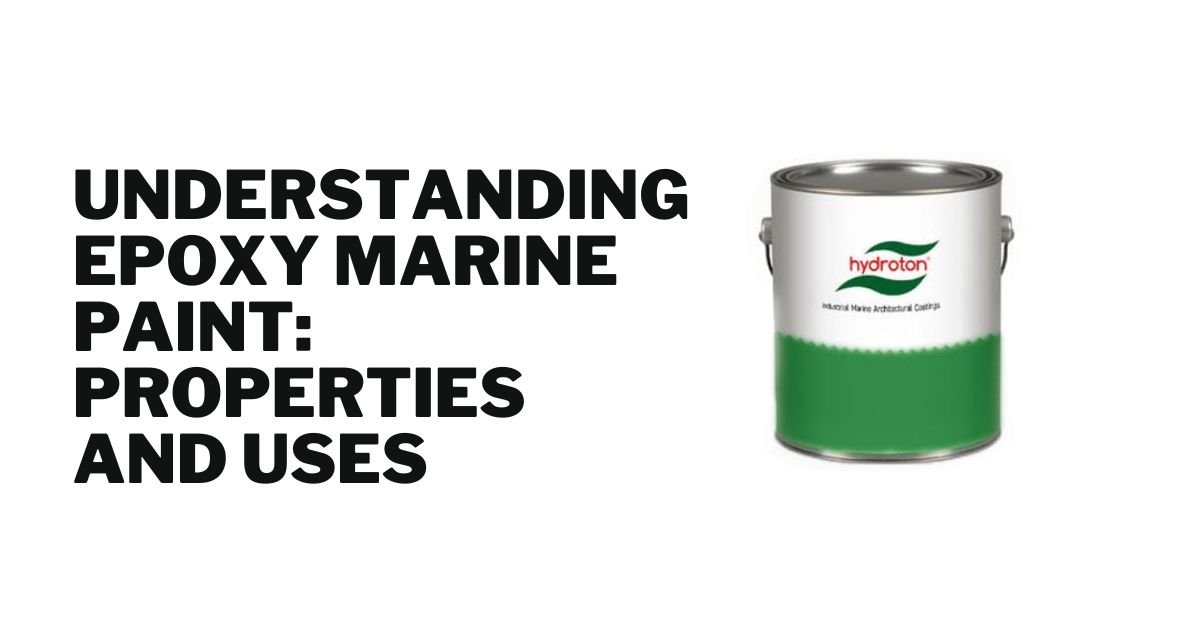
Epoxy Marine Paint: Properties, Applications and How to Choose the Right Coating
Epoxy marine paint is widely used as part of protective coating systems for ships, marine structures, tanks, decks, steelwork and other assets exposed to demanding environments. Its popularity comes from the ability of epoxy coatings to form a durable protective film that can help isolate the underlying substrate from moisture and other corrosive conditions.
However, not every epoxy coating is designed for the same service environment. A product suitable for a steel deck may not be the right choice for a ballast tank, cargo tank, underwater structure or another immersion application. The correct selection depends on the coating’s formulation, the substrate, exposure conditions, surface preparation and the complete coating system.
In this guide, we look at the main properties of marine epoxy paint, where epoxy coatings are commonly used, their limitations and the factors to consider when selecting an epoxy marine coating for a project.
What Is Epoxy Marine Paint?
Epoxy marine paint is a protective coating based on epoxy resin technology and a curing component that reacts to form a solid film. Once properly mixed, applied and cured, the coating can provide a barrier between the substrate and the surrounding environment.
Protective coatings are an important part of corrosion-control programmes because they help separate metals from water, oxygen, salts and other elements involved in corrosion. The Association for Materials Protection and Performance (AMPP) identifies epoxies among the commonly used materials in protective coating systems. AMPP’s protective coatings guidance explains how coatings provide protection by creating a barrier between a substrate and its environment.
In marine applications, epoxy coatings can be formulated for different requirements, including high-build corrosion protection, maintenance coating, tank lining and other specialised applications.
Key Properties of Epoxy Marine Paint
1. Barrier Protection
One of the main functions of an epoxy coating is to provide a protective barrier over the substrate. When correctly selected and applied, the coating helps reduce direct contact between steel and the surrounding environment.
This is particularly important in marine environments where steel can be exposed to moisture, seawater and other corrosive conditions. AMPP notes that protective coatings work in part by preventing water, oxygen and electrolytes from reaching the underlying metal. Read AMPP’s explanation of protective coating systems.
2. Good Adhesion When Properly Applied
Epoxy coatings can provide strong adhesion when applied over a suitably prepared substrate and within the manufacturer’s specified conditions.
Surface preparation is therefore not a minor part of the painting process. Contamination, corrosion products, moisture, loose existing coatings and unsuitable surface conditions can affect coating adhesion and overall performance.
3. High-Build Capability
Some marine epoxy products are formulated as high-build coatings, allowing substantial dry film thickness to be achieved with fewer coats than would be required with a conventional low-build system.
This can be useful when additional barrier protection is required on steel structures or when a coating system has been specified with a particular dry film thickness.
For example, PPG SigmaCover 350 is listed by Morven as a two-component, high-build polyamide-cured anticorrosive epoxy primer/coating for marine and protective coating applications. The product information identifies applications including topsides, decks, superstructures and cargo holds.
4. Abrasion Resistance
Depending on the formulation, epoxy coatings can provide useful resistance to wear and abrasion. This makes certain epoxy systems suitable for areas exposed to equipment, cargo handling, foot traffic or other mechanical stresses.
AMPP identifies high-performance and high-build epoxies as useful in abrasive environments such as high-traffic areas, storage spaces and other locations exposed to physical wear. :contentReference[oaicite:1]{index=1}
5. Chemical Resistance
Some epoxy coatings provide resistance to oils, chemicals and other substances. However, chemical resistance is product-specific and should never be assumed simply because a coating is described as epoxy.
For tanks, cargo areas and industrial structures, the substance being stored or handled, operating temperature and immersion conditions should be checked against the coating manufacturer’s technical documentation.
Where Is Epoxy Marine Paint Used?
Marine epoxy coatings are used in a wide range of applications, but the exact product and coating system should be selected according to the service environment.
Marine Hulls and Steel Structures
Epoxy coatings can form part of protective systems for steel surfaces on marine vessels and structures. Their primary role may be corrosion protection rather than cosmetic appearance.
For example, Morven’s PPG SigmaCover 280 is described as a universal epoxy anticorrosive primer suitable for applications including ballast tanks, decks, topsides, superstructures, hulls and cargo oil tanks, subject to the specified coating system.
Decks and High-Traffic Areas
Decks can experience moisture, foot traffic, equipment movement and mechanical wear. Certain epoxy systems can be suitable for these environments when the product is specified for the particular exposure.
AMPP notes that epoxy polyamide and surface-tolerant epoxy systems are commonly used for interior and exterior decks, with additional considerations for areas exposed to heavy traffic or moisture. :contentReference[oaicite:2]{index=2}
Ballast Tanks
Ballast tanks are particularly demanding environments because they can experience seawater exposure and conditions that promote corrosion.
AMPP identifies surface-tolerant epoxy systems among the coating technologies commonly used for ballast tank protection. The actual coating system must follow the applicable specification and product requirements. :contentReference[oaicite:3]{index=3}
Cargo Holds and Industrial Areas
Epoxy coatings can also be specified for cargo holds, industrial structures and other areas where corrosion, abrasion or chemical exposure needs to be considered.
Morven’s Intergard 475, for example, is listed as a two-component, high-solids, high-build epoxy coating used in anticorrosive systems for environments including offshore structures, petrochemical facilities, pulp and paper facilities and bridges.
Epoxy Marine Paint and Corrosion Protection
Corrosion is one of the main reasons protective coatings are used on marine assets. Saltwater, moisture and oxygen create conditions in which corrosion can develop on exposed steel.
A properly specified epoxy coating can act as a barrier between the metal and the surrounding environment. However, the coating itself is only one component of corrosion control.
The complete system can involve substrate preparation, primer selection, intermediate coats, topcoats, coating thickness, application conditions, inspection and maintenance.
Our article on why saltwater accelerates corrosion in Nigeria’s marine environment explains more about the relationship between marine exposure and corrosion.
Epoxy Marine Paint Has Limitations
Although epoxy coatings have many useful properties, they are not automatically suitable for every marine application.
One important consideration is ultraviolet exposure. Epoxy coatings can experience chalking or degradation when exposed to prolonged sunlight, which is why a suitable finishing coat may be specified for exposed areas.
AMPP explains that epoxies can provide strong wear protection but may break down under UV exposure and can therefore require a suitable finishing coat in exposed environments. :contentReference[oaicite:4]{index=4}
This is one reason why a marine coating system may combine epoxy with another coating technology. For example, an epoxy intermediate or build coat may be followed by a polyurethane finish where the specification calls for improved colour and gloss retention.
Morven’s PPG Sigmadur 550 is listed as a two-component aliphatic acrylic polyurethane finish with good colour and gloss retention for suitable atmospheric exposure conditions.
Epoxy Marine Paint vs Polyurethane Marine Paint
Epoxy and polyurethane coatings can perform different roles within a marine coating system, so they should not simply be treated as interchangeable products.
Epoxy coatings are commonly used where barrier protection, corrosion resistance, build and durability are important. Polyurethane finishes are often selected where colour retention, gloss and atmospheric weathering performance are important.
For example, an epoxy coating can serve as an intermediate protective layer while a suitable polyurethane product provides the exposed finishing coat. The exact system should always follow the coating manufacturer’s specification.
Our guide on polyurethane paint in Nigeria explains the differences between polyurethane coating technologies and some of their common applications.
Surface Preparation Before Applying Epoxy Marine Paint
Good surface preparation is essential to the performance of a marine epoxy coating.
Before application, the surface should be assessed for contamination, corrosion, moisture, existing coating condition and other factors that may affect adhesion.
Depending on the product and project specification, preparation can include cleaning, mechanical preparation, abrasive blasting or other approved preparation methods.
AMPP identifies surface preparation, primer application, coating application and inspection as important parts of protective coating work. :contentReference[oaicite:5]{index=5}
For a practical overview of the process, see our guide on how to prepare and apply marine paint.
How to Choose the Right Epoxy Marine Paint
Choosing an epoxy coating should start with the service environment rather than the product name alone.
Consider the following before purchasing:
- The part of the vessel or structure being coated
- The substrate, such as carbon steel, concrete or another material
- Whether the surface will be exposed to seawater or immersion
- Atmospheric exposure and UV conditions
- Expected chemical exposure
- Expected abrasion and mechanical wear
- Required dry film thickness
- Surface preparation requirements
- Compatibility with existing coatings
- Application method
- Temperature and humidity during application
- Required overcoating interval
- Inspection and maintenance requirements
The manufacturer’s technical data sheet should be treated as the primary reference for application conditions, compatibility, mixing, film thickness, drying and curing requirements.
Epoxy Marine Paint Products Available in Nigeria
Morven Industrial supplies a range of epoxy and other protective coating products for marine and industrial applications in Nigeria.
Available products include PPG Sigma coatings, International Paint products, Jotun Paint products and Hempel Paint products.
Specific epoxy products available on the website include PPG SigmaCover 280, PPG SigmaCover 350, Jotamastic 90, JOTAMASTIC 87, Intergard 475 and other epoxy-based products. The appropriate product depends on the intended application and manufacturer’s technical specification.
You can also browse the broader Painting and Protective Coating category to compare available coating technologies.
Final Thoughts
Epoxy marine paint is an important part of many marine and industrial protective coating systems. Its ability to form a protective film, provide barrier protection and support high-build coating systems makes it useful for applications ranging from steel structures and decks to ballast tanks and other demanding environments.
At the same time, epoxy is not a universal solution for every marine surface. Prolonged UV exposure, immersion requirements, chemical conditions, abrasion, substrate condition and compatibility with other coating layers all need to be considered before selecting a product.
The most reliable approach is to select the coating according to the actual service environment and follow the manufacturer’s technical documentation for surface preparation, application, curing and overcoating.
If you are sourcing epoxy marine paint or planning a protective coating project in Nigeria, contact Morven Industrial with the application area, substrate and project requirements so the appropriate coating options can be identified.
Posts Widget
-
1

-
2
-
3

-
4