How to Prepare and Apply Marine Paint: A Step-by-Step Guide
How to Prepare and Apply Marine Paint: A Step-by-Step Guide
Proper preparation and application are just as important as choosing the right marine paint. A coating system can be technically suitable for a vessel or marine structure, but poor surface preparation, incorrect mixing, unsuitable application conditions or inadequate curing can affect the final coating performance.
Marine painting therefore involves more than simply applying paint to a steel surface. The process normally includes inspection, cleaning, surface preparation, priming where required, mixing and application of the specified coating system, followed by curing and inspection.
This guide explains the main steps involved in marine paint surface preparation and application and highlights the factors that should be considered before starting a marine coating project.
Why Proper Marine Paint Application Matters
Marine vessels and structures can be exposed to seawater, salt spray, moisture, sunlight, chemicals, abrasion and mechanical damage. Protective coatings help separate the underlying substrate from these environmental conditions.
However, the coating only performs as intended when the surface and application process meet the requirements of the coating system.
The Association for Materials Protection and Performance (AMPP) identifies surface preparation, coating application and inspection as important parts of protective coating work. Its shipboard coating training also covers preparation methods, brush and roller application, film-thickness measurement, curing and safety. AMPP’s marine surface preparation and paint application guidance provides further technical information.
Step 1: Identify the Correct Marine Coating System
Before preparing the surface, confirm exactly what coating system is required.
Marine vessels contain different areas with different exposure conditions. An underwater hull, exterior deck, superstructure, ballast tank and cargo tank may all require different coating systems.
For example, an epoxy coating may form part of a corrosion-protection system, while a polyurethane product may be specified as an above-water finish.
Morven Industrial’s Painting and Protective Coating category contains marine and industrial coating products for different applications.
Examples include PPG SigmaCover 350, a high-build epoxy primer/coating used for marine and protective applications, and Interthane 990, a polyurethane finish specified for suitable above-water marine areas.
Always check the manufacturer’s product data sheet before beginning preparation or application. The product data sheet should determine the required preparation level, mixing procedure, application method, environmental conditions, recoating requirements and curing information.
Step 2: Inspect the Existing Surface
Before any cleaning or painting begins, inspect the surface carefully.
For a new steel surface, check for mill scale, rust, welding residues, grease, oil and other contaminants. For maintenance work, inspect the existing coating for peeling, blistering, cracking, corrosion, mechanical damage and areas where the coating has lost adhesion.
The inspection should also identify areas that require repair before the new coating system is applied.
Do not assume that a new coat of marine paint can simply be applied over every existing coating. The compatibility of the existing and proposed coating systems needs to be established before work begins.
Step 3: Remove Oil, Grease and Surface Contaminants
Oil, grease, dirt, salts and other contaminants can interfere with coating adhesion and surface cleanliness.
The surface should therefore be cleaned using the method specified for the coating system and project requirements.
Cleaning may involve suitable solvents, detergents, fresh water washing or other approved methods depending on the contaminant and substrate.
AMPP’s surface-preparation standards cover methods including solvent cleaning, abrasive blast cleaning, power-tool cleaning and waterjetting, as well as assessment of surface cleanliness and non-visible contaminants such as soluble salts. See AMPP’s surface preparation resources for more information.
Step 4: Remove Rust and Unsound Existing Coating
Corrosion products and loose or damaged coating should be removed using an appropriate preparation method.
Depending on the project, preparation may involve hand tools, power tools, abrasive blasting or waterjetting.
The required preparation standard should come from the coating specification and manufacturer’s technical documentation rather than being selected simply because a particular cleaning method is available.
For maintenance projects, the objective is not necessarily to remove every existing coating. The preparation requirement depends on the condition of the existing coating and the specified coating system.
Step 5: Achieve the Required Surface Profile and Cleanliness
Surface preparation is more than making steel look clean.
The prepared surface may need to achieve a particular level of cleanliness and surface profile so that the coating can properly adhere to the substrate.
AMPP’s surface preparation resources cover standards for different preparation methods and also address surface profile and soluble-salt testing. :contentReference[oaicite:1]{index=1}
The required standard should always be confirmed from the project specification and coating manufacturer’s technical documentation.
After preparation, avoid allowing the clean surface to become contaminated again before coating application.
Step 6: Check Environmental Conditions
Environmental conditions can affect marine coating application and curing.
Before applying the coating, check the conditions specified by the manufacturer. Depending on the product, important factors can include:
- Air temperature
- Surface temperature
- Relative humidity
- Dew point
- Ventilation
- Moisture on the substrate
- Weather conditions for exposed work
Do not apply a coating simply because the surface looks dry. The surface and surrounding environmental conditions should meet the requirements stated in the product documentation.
This becomes particularly important in humid coastal and marine environments where moisture can affect preparation and curing.
Step 7: Mix the Marine Paint Correctly
Many marine protective coatings are supplied as multi-component systems. These products must be mixed according to the manufacturer’s specified ratio and procedure.
For example, two-component epoxy or polyurethane coatings normally consist of a base component and a curing agent or hardener.
Before mixing:
- Read the product data sheet.
- Confirm the correct components.
- Check the specified mixing ratio.
- Check the required induction time if applicable.
- Determine the usable pot life.
- Prepare only the quantity that can be applied within the stated working period.
Do not estimate mixing ratios by eye. Incorrect proportions can affect curing and coating performance.
For example, PPG SigmaCover 280 is a two-component epoxy coating with a specified component ratio. The manufacturer’s product documentation should be followed for the exact mixing and application procedure.
Step 8: Apply the Primer Where Specified
A primer may form the first coating layer in a marine protective coating system.
The purpose and type of primer depend on the substrate, exposure and complete coating specification.
For example, Interzinc 52 is a metallic zinc-rich epoxy primer used as part of specified anticorrosive coating systems.
Other marine systems may use epoxy primers or other products depending on the required protection.
The primer should be applied at the specified film thickness and under the environmental conditions stated by the manufacturer.
Step 9: Apply the Intermediate and Finish Coats
After the primer has reached the appropriate condition for recoating, the remaining coats can be applied according to the specified system.
A complete marine coating system may include:
- Primer
- Intermediate or build coat
- Finish coat
- Specialised coating such as tank lining or antifouling where required
The number of coats and the required dry film thickness depend on the product and project specification.
For example, epoxy coatings such as PPG SigmaCover 350 can form part of a protective coating system, while Interthane 990 is specified as an above-water polyurethane finish.
The products should not be combined simply because they are both described as marine paint. Compatibility and recoating requirements must be confirmed from the manufacturer’s documentation.
Step 10: Choose the Appropriate Application Method
Marine coatings can be applied using different methods depending on the product, surface and project conditions.
Common methods include:
- Airless spray
- Conventional spray
- Brush application
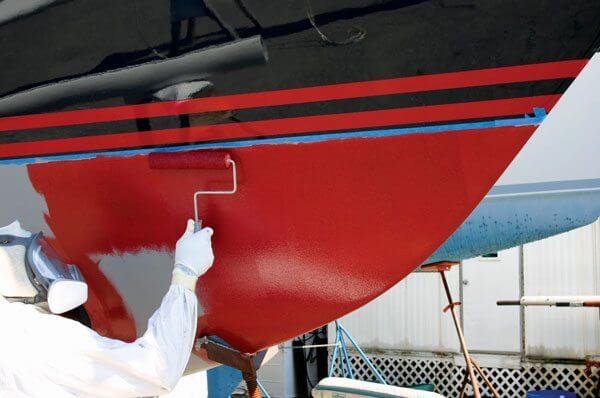
- Roller application
Spray application can be suitable for large areas, while brush and roller application may be useful for smaller areas, edges, touch-ups and specific maintenance work.
The manufacturer’s technical data sheet should always determine the permitted application methods and recommended equipment.
AMPP’s shipboard coating training specifically covers brush and roller application, including wet-film measurement and curing considerations. :contentReference[oaicite:2]{index=2}
Step 11: Maintain the Correct Film Thickness
Applying too little or too much coating can create problems.
The specified wet film thickness and dry film thickness should be followed according to the coating system.
Wet-film thickness can be checked during application using an appropriate wet-film thickness gauge. Dry-film thickness can be measured after the coating has cured sufficiently using the appropriate inspection equipment.
AMPP identifies wet and dry film thickness measurement as part of coating application and inspection practices. :contentReference[oaicite:3]{index=3}
Film thickness requirements should always come from the particular product data sheet and project specification.
Step 12: Allow the Coating to Cure Properly
Drying and curing are not necessarily the same thing.
A coating may appear dry on the surface while still requiring additional time to reach its specified cure condition.
Before exposing the coating to seawater, chemicals, abrasion, cargo or other service conditions, confirm that the coating has reached the required cure according to the manufacturer’s instructions.
Recoating intervals are also important. Applying the next coat too early or too late can affect the coating system and may require additional preparation.
Step 13: Inspect the Finished Coating
Inspection should be part of the coating process rather than something carried out only after the entire project has been completed.
Depending on the project, inspection may involve checking:
- Surface cleanliness
- Surface profile
- Coating appearance
- Wet-film thickness
- Dry-film thickness
- Adhesion where specified
- Visible defects
- Recoat intervals
- Curing condition
For specialised marine projects, the inspection requirements should be established before work begins and documented throughout the coating process.
AMPP’s marine resources include coating application, inspection and maintenance practices for complex marine structures. :contentReference[oaicite:4]{index=4}
Special Considerations for Antifouling Coatings
Underwater hulls may require an antifouling coating system to help control the attachment of marine organisms.
Antifouling products have specific application requirements and should not be treated like a general-purpose marine finish.
AMPP notes that correct application is particularly important for antifouling coatings and recommends consulting coating manufacturers and material data sheets before application. :contentReference[oaicite:5]{index=5}
The required sequence, timing between coats and application conditions should therefore be confirmed from the relevant product documentation.
Common Marine Painting Mistakes to Avoid
Several avoidable problems can reduce the quality of a marine coating project.
- Painting over oil, grease or other contaminants
- Applying paint to an inadequately prepared surface
- Ignoring soluble salts or other surface contamination
- Mixing two-component products using an incorrect ratio
- Exceeding the product’s pot life
- Applying coatings outside the specified environmental conditions
- Ignoring minimum and maximum recoating intervals
- Applying an unsuitable coating over an existing system
- Failing to measure coating thickness where required
- Putting a coating into service before the required cure
Good coating practice depends on following the product documentation and controlling the preparation and application process from beginning to end.
Marine Paint Application in Nigeria
Marine coating projects in Nigeria can involve vessels, ports, terminals, offshore assets, marine structures and industrial facilities exposed to coastal conditions.
For these projects, the local environment should be considered together with the actual service conditions of the asset. Salt spray, humidity, rainfall, surface temperature and access conditions can all influence preparation and application planning.
Morven Industrial provides marine and protective coating products through its Painting and Protective Coating range.
You can also explore specific product categories including Sigma Paint, International Paint, and Jotun Paint.
For maintenance projects, products such as Jotamastic 90 may be relevant where the product’s specified application matches the project requirements.
How to Prepare for a Marine Painting Project
Before starting a marine painting project, gather the information needed to select and apply the coating correctly.
- Identify the vessel or structure.
- Identify the exact area being coated.
- Confirm the substrate.
- Assess the existing coating and corrosion condition.
- Determine the required surface preparation.
- Identify the complete coating system.
- Review the manufacturer’s product data sheets.
- Confirm application equipment and method.
- Check environmental conditions.
- Plan inspection and coating-thickness measurements.
- Allow sufficient time for drying, curing and recoating.
Final Thoughts
Proper marine paint application starts long before the first coat is applied. Surface inspection, cleaning, preparation, environmental control, correct mixing, application, film-thickness control, curing and inspection all contribute to the quality of the finished coating system.
The most important principle is to match the preparation and application process to the specific coating product and service environment. Marine paint should not be treated as a one-size-fits-all material.
If you are sourcing marine paint or protective coatings for a vessel, marine structure or industrial application in Nigeria, explore Morven Industrial’s marine and protective coating products or contact Morven Industrial with your project requirements.
Posts Widget
-
1

-
2
-
3
-
4