
Anti-Rust Paint in Nigeria: Types, Applications and How to Choose
Anti-Rust Paint in Nigeria: Types, Applications and How to Choose
Rust and corrosion can gradually damage steel and other metal surfaces when they are exposed to moisture, oxygen, salt, chemicals and demanding environmental conditions. For businesses operating industrial equipment, marine assets, tanks, structural steel and other metal structures, controlling corrosion is an important part of protecting the asset.
Anti-rust paint and other protective coating systems can help reduce exposure of metal surfaces to corrosive environments. However, choosing an appropriate coating involves more than simply selecting a product labelled as anti-rust. The type of metal, operating environment, surface condition, exposure level and required coating system should all be considered.
In Nigeria, these considerations can be particularly relevant for equipment and structures operating in coastal, marine, industrial and outdoor environments. This guide explains the common types of anti-rust and anti-corrosion coatings, where they are used and what to consider when sourcing them.
What Is Anti-Rust Paint?
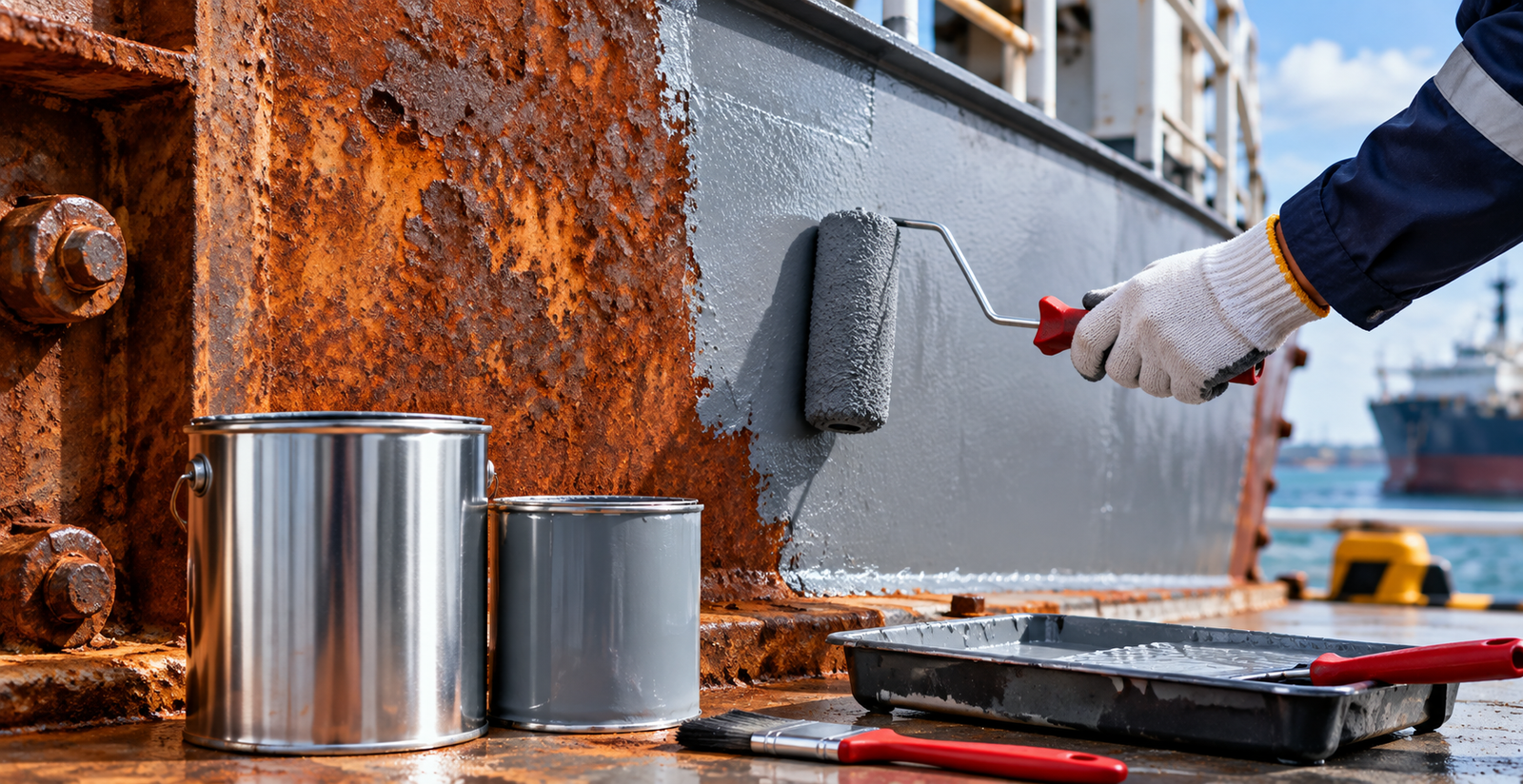
Anti-rust paint is a protective coating designed to help reduce the corrosion of metal surfaces. Depending on the formulation, a coating may act as a barrier between the metal and the surrounding environment or form part of a coating system that provides additional corrosion protection.
Different products are designed for different conditions. A primer used on structural steel in an atmospheric environment may have different properties from an epoxy coating intended for marine maintenance or a zinc-rich primer used as part of an anticorrosive coating system.
For this reason, the term “anti-rust paint” covers a range of coating technologies rather than one specific type of paint.
Why Metal Surfaces Rust
Rust is associated with the corrosion of iron and steel. When steel is exposed to moisture and oxygen, electrochemical reactions can result in corrosion of the metal.
The rate and severity of corrosion can be influenced by factors such as humidity, salt, temperature, contaminants, immersion and the condition of the existing coating.
Coatings can form a protective barrier that helps separate the metal from the surrounding environment. AMPP describes protective coatings as an important method of corrosion control for structural steel and notes that coating selection should take the corrosiveness of the service environment into account.
Common Types of Anti-Rust and Anti-Corrosion Paint
1. Epoxy Anti-Rust Coatings
Epoxy coatings are widely used in industrial and marine protective coating systems. Depending on the formulation, they can provide a durable coating layer for steel and other substrates exposed to demanding environments.
Morven Industrial supplies several epoxy protective coatings. PPG SigmaCover 350, for example, is a two-component, high-build polyamide-cured anticorrosive epoxy primer/coating listed for marine and protective coating applications including topsides, decks, superstructures and cargo holds.
Another option is PPG SigmaCover 456, a two-component, high-build polyamide-cured recoatable epoxy coating for steel and concrete structures exposed to atmospheric land or marine conditions.
Epoxy products should always be selected according to their specified application and coating system rather than simply because they are described as corrosion resistant.
2. Zinc-Rich Primers
Zinc-rich primers are another important category of anticorrosive coatings. These coatings contain zinc and can provide corrosion protection as part of an appropriately designed coating system.
Morven Industrial supplies Interzinc 52, a two-component metallic zinc-rich epoxy primer listed for anticorrosive coating systems in aggressive environments including offshore structures, petrochemical facilities, bridges and power plants.
Morven also lists Interzinc 22, a two-component inorganic zinc-rich ethyl silicate primer designed for specified protective coating applications.
Zinc-rich primers are not interchangeable with every other type of primer. Their surface preparation, application and overcoating requirements should be followed carefully.
3. Epoxy Mastic Coatings
Epoxy mastic coatings are commonly used for maintenance and repair applications where existing structures or coatings may not allow the same preparation conditions as a new-build project.
Jotamastic 90 is a two-component polyamine-cured epoxy mastic coating listed by Morven for repair and maintenance. It is described as surface tolerant, high solids and high build, and can be used as a primer, midcoat, finish coat or single-coat system in specified atmospheric and immersed environments.
Morven also supplies JOTAMASTIC 87, another two-component epoxy mastic designed primarily for maintenance and repair applications. Its listed marine applications include outside hulls, exterior and interior areas and water ballast tanks.
Where Is Anti-Rust Paint Used?
Industrial Equipment and Machinery
Industrial equipment can be exposed to moisture, chemicals, abrasion and other conditions that contribute to corrosion. Protective coatings can form part of a maintenance strategy for suitable metal equipment and structures.
The coating selected should match the equipment material, service environment and expected exposure. Existing rust, old coatings and contamination should also be assessed before a maintenance coating is applied.
Marine Vessels
Marine vessels are exposed to seawater, humidity, salt spray and other conditions that can accelerate corrosion. Different areas of a vessel may require different coating systems depending on whether they are above water, below water, immersed or exposed to specific cargo or operating conditions.
Morven’s Painting and Protective Coating category includes marine and protective coating products from PPG Sigma, Jotun, International Paint and Hempel.
For example, PPG SigmaCover 280 is listed for applications including ballast tanks, decks, topsides, superstructures, hulls and cargo oil tanks. This illustrates why product selection should be based on the actual vessel area rather than simply choosing a general-purpose “anti-rust paint.”
Structural Steel
Structural steel used in industrial facilities, bridges, platforms, tanks and other structures can be exposed to atmospheric moisture and contaminants.
A suitable coating system can help protect the steel from the surrounding environment. The appropriate system depends on the corrosivity of the environment, surface preparation requirements and expected service conditions.
Why Surface Preparation Matters
Applying anti-rust paint over a poorly prepared surface can compromise the performance of the coating system. Rust, oil, grease, salts, dust, loose coatings and other contaminants can affect adhesion and coating performance.
Surface preparation may involve methods such as abrasive blasting, power-tool cleaning, waterjetting or other approved preparation techniques depending on the substrate and coating specification.
AMPP identifies surface preparation as a key part of protective coating work and provides guidance covering methods including abrasive blasting, waterjetting and mechanical cleaning.
For example, the product information for PPG SigmaCover 350 specifies different surface preparation conditions for blast-cleaned steel, power-tool-cleaned steel and previously coated surfaces.
The exact preparation method should therefore be determined from the coating manufacturer’s technical documentation and the condition of the substrate.
How to Choose Anti-Rust Paint in Nigeria
1. Identify the Metal Surface
Start by identifying whether the coating will be applied to carbon steel, non-ferrous metal or another substrate. Not every coating is suitable for every material.
2. Assess the Environment
Consider whether the surface will be exposed to rain, humidity, salt spray, seawater, chemicals, immersion, abrasion or indoor atmospheric conditions.
A coating system suitable for an indoor industrial environment may not be suitable for a marine or continuously immersed application.
3. Check the Existing Surface
For maintenance projects, determine whether the surface contains existing rust, old paint, oil, grease, salts or other contaminants. The condition of the existing coating can also influence product selection and preparation requirements.
4. Consider the Complete Coating System
Anti-rust protection may involve several layers rather than a single product. Depending on the application, a system may include a primer, intermediate or build coat and finishing coat.
These layers need to be compatible. The manufacturer’s technical data should be followed when selecting products for use together.
5. Review Application Conditions
Temperature, humidity, surface temperature, dew point, ventilation and application method can influence coating application and curing.
Two-component coatings may also have specific mixing ratios, pot lives and application requirements. These details should be confirmed from the relevant technical documentation before work begins.
Anti-Rust Paint for Marine and Coastal Environments
Coastal and marine environments can present demanding corrosion conditions because metal surfaces may be exposed to moisture and salt-containing air or seawater.
For marine structures, the coating system should be selected according to the specific area and exposure. Hulls, decks, topsides, ballast tanks and other vessel areas may require different products or coating systems.
Morven’s range includes products such as PPG SigmaCover 630, a surface-tolerant, high-build epoxy primer/coating listed for maintenance coating of dry cargo holds, decks and hulls and for steel and concrete structures exposed to atmospheric land or marine conditions.
For maintenance projects where surface preparation is a major consideration, epoxy mastic products such as Jotamastic 90 and JOTAMASTIC 87 may also be relevant when their specified application conditions are met.
Anti-Rust Paint Supplier in Nigeria
When sourcing anti-rust paint, the supplier should be able to provide information about the product’s intended application, technical requirements and available documentation.
Morven Industrial supplies industrial and marine protective coating products through its Painting and Protective Coating range. The catalogue includes PPG Sigma, Jotun, International Paint and Hempel products for different protective coating applications.
Rather than selecting a coating based only on the phrase “anti-rust,” provide details about the project, substrate, operating environment, existing coating condition and intended application. This makes it easier to identify products that are appropriate for the specified coating system.
Best Practices for Rust and Corrosion Protection
- Inspect metal surfaces regularly for early signs of corrosion.
- Remove rust, contaminants and loose coatings before applying a maintenance coating.
- Use the surface preparation method specified for the coating system.
- Select a coating based on the service environment and substrate.
- Use compatible primer, intermediate and finishing coats where required.
- Follow the manufacturer’s mixing and application instructions.
- Monitor temperature, humidity and surface conditions during application.
- Inspect the finished coating for defects and areas requiring repair.
- Keep records of coating products, preparation methods and maintenance work.
Conclusion
Anti-rust paint in Nigeria covers a range of protective coating technologies rather than one universal product. Epoxy coatings, zinc-rich primers and epoxy mastics can all have different roles within corrosion protection systems.
The right choice depends on the metal surface, environment, level of exposure, existing coating condition, surface preparation and the complete coating system required for the project.
Morven Industrial supplies anti-corrosion and protective coating products for industrial, structural and marine applications in Nigeria. Explore the Painting and Protective Coating range or contact Morven Industrial with your project requirements.
Posts Widget
-
1

-
2
-
3
-
4