Thermoplastic Powder Road Marking Paint: How It Works, Benefits and Applications
Clear and durable road markings play an important role in organising traffic and helping drivers and pedestrians understand how a road or paved area should be used. For roads, highways, parking areas and other high-use surfaces, the marking material needs to be selected according to the project requirements, surface conditions and expected traffic.
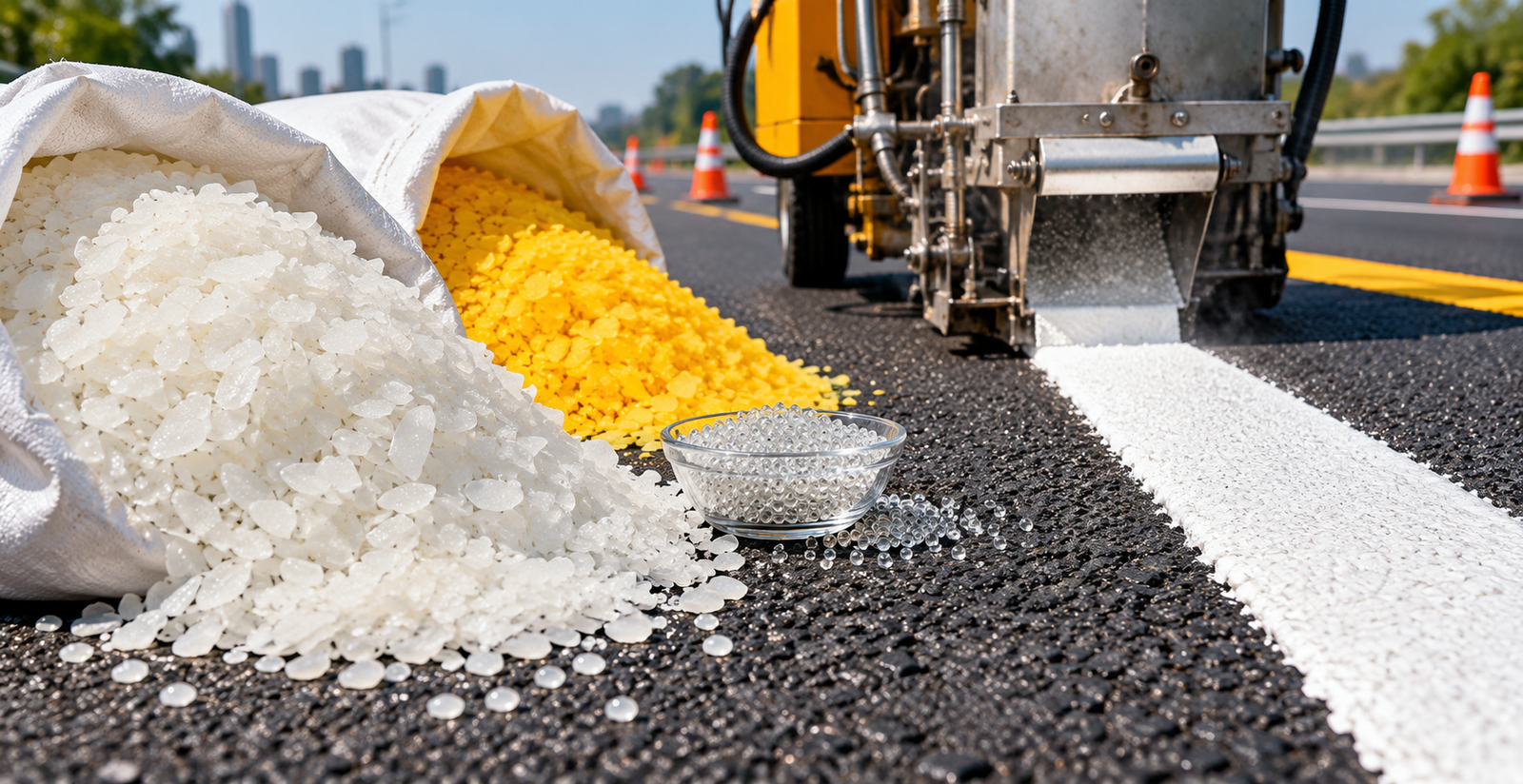
One of the materials widely used for this purpose is thermoplastic powder road marking paint. Unlike conventional liquid paints, thermoplastic road marking material is supplied as a solid powder and is heated before application. Once applied and cooled, it forms a solid marking on the pavement.
For contractors, road construction companies, government agencies and facility managers in Nigeria, understanding how thermoplastic powder road marking paint works can help when selecting the right road marking solution.
What Is Thermoplastic Powder Road Marking Paint?
Thermoplastic powder road marking paint is a hot-melt road marking material supplied in powder form. It is formulated from components such as thermoplastic resins, pigments, fillers, additives and, depending on the product, reflective glass beads.
The material remains solid under normal conditions. During application, it is heated using suitable thermoplastic road marking equipment until it becomes workable. It is then applied to the prepared pavement surface and allowed to cool and solidify.
This hot-melt process is what gives thermoplastic road markings their characteristic solid and durable finish.
Thermoplastic road marking paint is also commonly referred to as hot melt marking paint. It is used for road lines, lane markings, pedestrian crossings, arrows, symbols and other pavement markings. :contentReference[oaicite:2]{index=2}
How Does Thermoplastic Road Marking Paint Work?
The application process is different from painting a surface with an ordinary liquid coating.
The thermoplastic material is first heated in suitable equipment. As the temperature increases, the thermoplastic resin softens and the powder becomes suitable for application.
The heated material is then applied to the prepared road surface using an appropriate road marking machine or application method. Once the material cools, it forms a solid marking.
Where reflective glass beads are incorporated into or applied to the marking, they can help return light from vehicle headlights toward drivers, improving the visibility of the marking under suitable conditions.
The exact heating temperature, application thickness, equipment and application procedure should always follow the manufacturer’s technical requirements for the specific product being used.
What Is Thermoplastic Paint Made Of?
The exact formulation varies between manufacturers and product grades, but thermoplastic road marking materials commonly contain several key components.
Thermoplastic Resin
The resin provides the thermoplastic characteristics of the material. It softens when heated and becomes solid again after cooling, allowing the material to be applied as a hot melt.
Pigments
Pigments provide the colour of the road marking. White and yellow are commonly used for road markings, while other colours may be specified for particular applications.
Glass Beads
Reflective glass beads can be used to improve the nighttime visibility of road markings by reflecting light from vehicle headlights.
Fillers and Additives
Fillers and additives can form part of the formulation and influence characteristics such as application behaviour, consistency and the performance requirements of the finished marking.
The exact formulation should be confirmed from the manufacturer’s technical documentation rather than assumed from the general term “thermoplastic paint.”
Benefits of Thermoplastic Powder Road Marking Paint
1. Durable Road Markings
One of the main reasons thermoplastic is used for road marking is its ability to form a solid marking after application and cooling.
For roads and paved areas exposed to regular traffic, the durability of the marking material is an important consideration when planning maintenance and replacement.
2. Good Visibility
Road markings need to remain visible to drivers and pedestrians during normal use.
Thermoplastic markings can provide clear and noticeable lines, while reflective glass beads can improve visibility when illuminated by vehicle headlights.
This is particularly relevant for applications such as lane markings, pedestrian crossings, road edges and other traffic guidance markings.
3. Suitable for High-Traffic Areas
Thermoplastic road marking materials are commonly used on roads and other paved surfaces where markings are exposed to regular traffic.
They can be considered for highways, urban roads, intersections, parking areas and other locations where durable pavement markings are required.
4. Fast Return to Use
Because the applied material solidifies as it cools, thermoplastic road markings can allow a marked area to return to service relatively quickly when the application is properly carried out.
The actual cooling and opening time depends on the product, application conditions, marking thickness, weather and other project factors.
5. Clear Lane and Traffic Guidance
Road markings do more than add colour to a road surface. They communicate information to road users.
Thermoplastic markings can be used for lane separation, edge lines, arrows, pedestrian crossings, parking bays and other traffic-control markings.
Where Is Thermoplastic Powder Road Marking Paint Used?
Thermoplastic road marking paint can be used in a range of paved environments.
Roads and Highways
Thermoplastic markings are commonly used for lane lines, centre lines, edge markings, arrows and other road guidance applications.
Urban Roads and Intersections
Busy urban areas require markings that clearly communicate lane direction, pedestrian movement and traffic restrictions.
Pedestrian Crossings
Thermoplastic materials can be used to create clearly defined pedestrian crossing markings and other pavement symbols.
Parking Areas
Parking facilities can use road marking materials to define parking bays, traffic lanes, pedestrian walkways and directional markings.
Industrial and Private Facilities
Industrial compounds, logistics facilities, warehouses and other private paved areas may also require durable markings for vehicle movement, pedestrian routes and traffic management.
Thermoplastic Powder vs Other Road Marking Paints
There is no single road marking material that is automatically suitable for every project.
Road marking materials can include water-based paints, solvent-based paints, thermoplastic materials and other coating systems. The right choice depends on the surface, traffic conditions, application method, project specification, expected performance and available equipment.
For example, thermoplastic requires heating equipment during application, while some other road marking systems are supplied and applied as liquid coatings.
Morven Industrial’s Road Marking Paint category includes different road marking solutions, including reflective thermoplastic and polyurethane road marking products.
Comparing the available systems against the requirements of the project is therefore important before placing an order.
What Should You Consider Before Buying Thermoplastic Road Marking Paint?
Project Requirements
Start by identifying exactly where the material will be used. A highway project may have different requirements from a private parking facility or an industrial compound.
Surface Condition
The condition and type of pavement can affect the preparation and application requirements. Asphalt, concrete and other surfaces should be assessed before the marking material is applied.
Traffic Volume
Consider how much traffic the marked surface is expected to receive. Areas with frequent vehicle movement may require a road marking system selected specifically for that level of use.
Visibility Requirements
For projects where nighttime visibility is important, ask about the reflective properties of the selected marking system and whether glass beads are included or applied during installation.
Application Equipment
Thermoplastic powder requires suitable heating and application equipment. Contractors should make sure the equipment and application method are appropriate for the selected material.
Technical Documentation
Before purchasing, request the manufacturer’s Technical Data Sheet and review the recommended application conditions, preparation requirements and product specifications.
Why Proper Application Matters
Choosing a good road marking material is only part of the process. Surface preparation and correct application are also important.
The pavement should be properly prepared before application. Dirt, loose material, moisture or other contaminants can affect the quality of the finished marking.
The material should also be heated and applied according to the manufacturer’s requirements. Factors such as application temperature, thickness, equipment, surface condition and weather can affect the final result.
For this reason, contractors should follow the technical documentation supplied with the specific thermoplastic product rather than relying only on general application instructions.
Thermoplastic Road Marking Paint in Nigeria
Demand for road marking materials in Nigeria is connected to road construction, rehabilitation, traffic management, parking facilities, industrial developments and other infrastructure projects.
When sourcing thermoplastic road marking paint in Nigeria, buyers should look beyond the product name and consider the application, required quantity, technical specification, packaging, availability and supplier support.
Morven Industrial supplies road marking materials for customers working on different road and paved-surface applications across Nigeria.
For customers looking specifically for a powder-form thermoplastic product, see Morven’s Reflective Thermoplastic Powder Road Marking Paint.
Thermoplastic Powder Road Marking Paint for Road Projects
Thermoplastic powder road marking paint can be a practical option for projects that require clearly defined and durable pavement markings. Its hot-melt application process, solid finish and potential for reflective visibility make it suitable for many road and traffic-marking applications.
However, the right product should always be selected according to the actual project conditions. Surface type, traffic volume, visibility requirements, application equipment and manufacturer specifications should all be considered before work begins.
If you are sourcing thermoplastic powder road marking paint in Nigeria, Morven Industrial can assist with product information and supply options based on your project requirements.
Contact Morven Industrial to discuss your required quantity, application and delivery requirements.
Posts Widget
-
1

-
2
-
3
-
4