
How to Choose the Right Personal Protective Equipment for Different Work Environments
How to Choose the Right Personal Protective Equipment for Different Work Environments
Personal protective equipment (PPE) is an important part of workplace safety where workers may be exposed to hazards that cannot be adequately controlled through other measures. The right PPE can help reduce exposure to hazards affecting the eyes, face, head, hands, feet, hearing, respiratory system and body.
However, choosing PPE should not be based simply on the type of job or the industry. Two workers in the same industry may face different hazards depending on the task they perform, the equipment they operate and the materials they handle.
For businesses sourcing personal protective equipment in Nigeria, the starting point should therefore be the workplace hazards and the level of protection required.
This guide explains how to approach PPE selection for different work environments and highlights some of the safety equipment available from Morven Industrial for industrial, construction, manufacturing, marine and other workplace applications.
What Is Personal Protective Equipment?
Personal protective equipment refers to equipment, clothing or devices worn or used by workers to reduce exposure to workplace hazards.
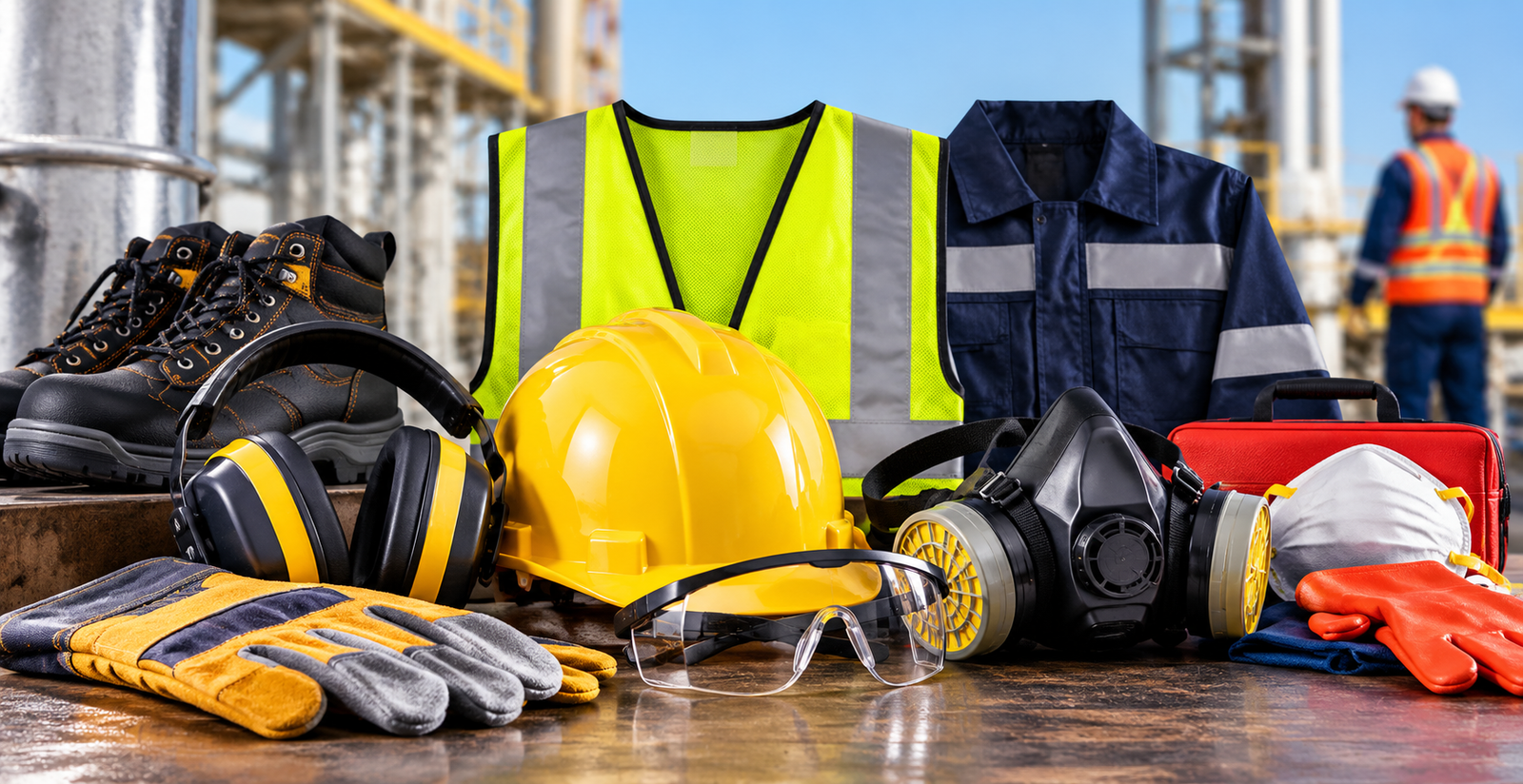
Examples include safety helmets, protective eyewear, gloves, safety boots, hearing protection, protective clothing, face shields, respirators and high-visibility clothing.
The Occupational Safety and Health Administration (OSHA) explains that PPE can protect workers from hazards including chemical, physical, electrical, mechanical and other workplace exposures. OSHA also recommends assessing the workplace before selecting PPE and matching the protective equipment to the identified hazards.
This means that PPE selection should start with the hazard rather than with the product catalogue.
How to Select PPE for a Workplace
Before purchasing personal protective equipment, assess the tasks being performed and identify the hazards workers may encounter.
1. Identify the Workplace Hazards
Look at the work area, equipment, materials, processes and tasks. Potential hazards can include falling objects, flying particles, chemicals, excessive noise, heat, sharp objects, electrical hazards, dust, moving machinery and slips or falls.
OSHA’s hazard-assessment guidance recommends surveying the workplace and considering hazard categories such as impact, penetration, compression, chemicals, heat, harmful dust and optical radiation.
The results of that assessment should guide the selection of PPE.
2. Match the PPE to the Hazard
Different PPE protects against different hazards. Safety glasses, for example, are not automatically suitable for every eye hazard. Gloves designed for general handling may not provide the protection required for chemical exposure or high temperatures.
The PPE should therefore be selected according to the specific hazard and the protection required.
3. Check Fit and Compatibility
Proper fit matters because protective equipment that does not fit correctly may not provide the intended protection and can interfere with the worker’s movement or other required PPE.
When several pieces of PPE are worn together, they should also be compatible. For example, eye protection should not interfere with other equipment that must be worn for the same task.
4. Follow Manufacturer Instructions
Manufacturers provide information about the intended use, limitations, maintenance and replacement of PPE. Workers and supervisors should follow the instructions supplied with the specific product.
Personal Protective Equipment for Construction Work
Construction environments can involve several hazards at the same time, including falling objects, dust, flying particles, noise, sharp materials, moving equipment and slips or falls.
Depending on the task and hazard assessment, construction workers may require combinations of head, eye, hearing, hand, foot and high-visibility protection.
Head Protection
An industrial safety helmet can help protect the head against relevant workplace hazards such as impacts and falling objects where the helmet is designed for that application.
Morven Industrial lists Industrial Safety Helmet as part of its personal protection equipment range.
For situations involving minor bump hazards where an industrial helmet is not required, a bump cap may have a different role. Morven also lists Safety Bump Caps. The two should not be treated as interchangeable; the appropriate choice depends on the identified hazard.
High-Visibility Protection
Workers operating around vehicles, traffic or moving equipment may need high-visibility clothing to make them easier to see.
Morven supplies Safety Vests, which are designed to increase worker visibility and are commonly used by construction workers, road workers and others who work around traffic or in low-light conditions.
PPE for Manufacturing and Industrial Work
Manufacturing environments can contain machinery, moving parts, sharp materials, noise, dust, chemicals and other hazards. The required PPE depends on the processes being carried out.
Eye protection may be required where workers are exposed to flying particles or other eye hazards. Hearing protection can be necessary in areas with excessive noise. Gloves and safety footwear may be appropriate for tasks involving mechanical or physical hazards.
Morven’s Personal Protection Equipment category includes separate product groups for eye, hearing, head, hand, foot, face and body protection.
PPE for Chemical Handling
Chemical handling requires careful consideration because the appropriate PPE depends on the chemical, concentration, route of exposure and task being performed.
Depending on the hazard assessment, workers may require chemical-resistant gloves, protective footwear, eye protection, face protection or protective clothing.
Morven Industrial lists Hand Protection products including chemical and acid resistant gloves.
For footwear, the Foot Protection category includes chemical-resistant safety boots.
For chemical splash hazards affecting the eyes or face, appropriate goggles or face protection should be selected according to the specific chemical and manufacturer’s recommendations.
PPE for Welding and Metal Work
Welding and metalworking can involve hazards such as sparks, intense light, heat, fumes, flying particles, noise and sharp materials.
Depending on the welding process and task, workers may need welding helmets or appropriate eye protection, protective gloves, protective clothing, safety footwear and respiratory protection where required.
The exact filter or protection level should be selected according to the welding process and applicable safety requirements rather than choosing eye protection based only on appearance.
Morven’s Eye Protection category provides access to protective eyewear products, while its hand-protection range includes products intended for different workplace hazards.
PPE for Marine and Industrial Environments
Marine and industrial workplaces can combine several hazards, including chemicals, machinery, heat, noise, wet surfaces, moving equipment and work at height.
The required PPE should therefore be determined from the particular task rather than assuming that one standard PPE set is suitable for every marine or industrial worker.
For workers operating around industrial equipment, suitable safety footwear, eye protection, gloves, hearing protection and head protection may all form part of the workplace PPE programme where the hazard assessment identifies those needs.
For marine maintenance and related industrial activities, Morven also supplies Drew Marine Chemicals and other marine products. Chemical handling procedures and PPE requirements should always be considered together when working with marine maintenance chemicals.
Hand Protection: Choosing the Right Gloves
Gloves are not a single-purpose item. Different gloves are designed for different hazards and tasks.
For example, Morven’s PPE range includes:
- Heat resistant gloves.
- Chemical and acid resistant gloves.
- Puncture resistant gloves.
- Leather gloves.
- Rubber and latex gloves.
- Vibration and impact resistant gloves.
- Dielectric electric safety gloves.
The correct glove should be selected based on the hazard and the manufacturer’s stated protection and limitations.
Explore the Hand Protection category to review the available options.
Foot Protection for Industrial Work
Safety footwear can protect workers against hazards affecting the feet, including falling objects, punctures, slips and other workplace risks.
Morven Industrial’s PPE range includes several types of protective footwear, including Industrial Safety Boots, puncture-resistant safety boots, slip-resistant safety boots, waterproof safety boots and chemical-resistant boots.
For example, industrial safety boots are designed for hazardous work environments such as construction, manufacturing and oil-rig applications. The appropriate footwear should be selected according to the actual hazards present at the workplace.
Eye and Face Protection
Eye injuries can occur from flying particles, chemical splashes, dust, intense light and other hazards.
Safety glasses, goggles and face shields provide different forms of protection and should be selected according to the hazard.
Morven lists UVEX Safety Eyes Glass within its eye-protection range. Morven also has a dedicated Eye Protection category.
For hazards involving both impact and facial exposure, face protection may need to be used together with suitable eye protection. The exact combination depends on the hazard assessment.
Hearing Protection
Workers exposed to high noise levels may require hearing protection as part of the workplace safety programme.
Common forms include earplugs and earmuffs. The appropriate selection depends on the noise environment, duration of exposure and requirements of the workplace.
Morven provides a dedicated Hearing Protection category for workplace hearing protection products.
Body Protection and Protective Clothing
Some tasks expose workers to dirt, chemicals, heat, splashes, sparks or other hazards that may require protective clothing.
Morven’s PPE range includes Body Protection products, including coveralls and full-body protective clothing.
Protective clothing should be selected according to the material or hazard involved and should not be assumed to protect against every chemical, temperature or workplace condition.
Does Every Worker Need the Same PPE?
No. PPE requirements can vary between workers, even within the same company.
A worker operating machinery may face different hazards from a worker handling chemicals. A welder may require specialised eye and face protection, while a warehouse worker may have greater exposure to moving vehicles, falling materials or manual-handling hazards.
This is why PPE selection should be based on the task and hazard assessment rather than simply issuing every employee the same equipment.
PPE Is Part of a Wider Safety Programme
Personal protective equipment is important, but it should not be treated as the only way to control workplace hazards.
OSHA guidance explains that engineering controls and work-practice controls should be considered to eliminate or reduce hazards where feasible, with PPE used to protect workers from hazards that remain.
This approach is important because PPE depends on correct selection, fit, use, maintenance and training.
Employers should therefore consider PPE as one part of a broader workplace safety programme.
How to Maintain Personal Protective Equipment
Proper maintenance can help keep PPE in usable condition.
Depending on the equipment, maintenance may include:
- Regular inspection for damage or deterioration.
- Cleaning according to the manufacturer’s instructions.
- Proper storage when the equipment is not being used.
- Replacement of damaged or worn equipment.
- Checking adjustable components and fasteners.
- Following the manufacturer’s recommended service or replacement intervals.
Workers should also receive appropriate instruction on how to put on, adjust, use, remove and care for the PPE provided to them.
Where to Buy Personal Protective Equipment in Nigeria
If you are looking for personal protective equipment in Nigeria, Morven Industrial supplies a range of PPE products for different workplace applications.
The current PPE range includes head protection, eye protection, hearing protection, hand protection, foot protection and body protection, together with other safety equipment categories.
You can browse the main Safety and Personal Protective Equipment category or go directly to the Personal Protection Equipment section.
When requesting PPE, provide information about the work environment, task, hazards, number of workers and type of protection required. This makes it easier to identify products appropriate for the intended application.
PPE Supplier in Lagos, Nigeria
Morven Industrial Limited is based in Apapa, Lagos, and supplies safety, PPE, industrial and engineering products to customers in Nigeria.
For businesses purchasing PPE for construction sites, manufacturing facilities, industrial operations, marine work or other environments, the required equipment should be selected according to the hazards identified in the workplace.
For product enquiries, visit the Morven Industrial contact page.
Request Personal Protective Equipment in Nigeria
Looking for PPE for your workers or workplace? Browse Morven Industrial’s range of personal protective equipment and identify the products relevant to your work environment.
Visit the Personal Protection Equipment category to explore available products, or contact Morven Industrial for your PPE requirements.
Always carry out an appropriate workplace hazard assessment and follow the manufacturer’s instructions, applicable workplace safety requirements and relevant standards when selecting and using PPE.
Posts Widget
-
1

-
2

-
3

-
4