
Oil Spill Control in Nigeria: Spill Response Products, Equipment and Best Practices
Oil Spill Control in Nigeria: Spill Response Products, Equipment and Best Practices
Oil and chemical spills can happen in different working environments, including industrial facilities, storage areas, workshops, ports, marine operations, oil and gas facilities and transportation areas. When a spill occurs, having the right response equipment available can make it easier to contain the material, protect workers and reduce the risk of contamination spreading beyond the affected area.
Effective oil spill control in Nigeria is therefore not only about cleaning up a spill after it happens. It also involves preparation, suitable response equipment, trained personnel, safe handling procedures and appropriate disposal or recovery practices.
For businesses operating around oil, fuel, chemicals and other potentially polluting materials, a properly planned spill response system can form an important part of workplace and environmental management.
What Is Oil Spill Control?
Oil spill control refers to the measures used to prevent, contain, recover and manage an oil or oily-material spill.
The response may involve equipment and materials designed to stop the spill from spreading, absorb or recover the released material, protect drains and waterways, and support the subsequent cleanup process.
The appropriate response depends on the type and quantity of material released, the location of the spill, the surrounding environment and the applicable safety and environmental requirements.
For a small workplace spill, the response may involve a suitable spill kit and absorbent materials. A larger incident may require containment equipment, specialised response personnel, recovery equipment and notification of the relevant authorities.
Why Is Spill Control Important in Nigeria?
Nigeria has significant oil and gas, marine, industrial, manufacturing and transportation activities where fuels, oils and chemicals are handled or stored.
A spill can create risks for workers, equipment, drainage systems, soil and nearby water bodies if it is not controlled appropriately.
The National Oil Spill Detection and Response Agency (NOSDRA) is responsible for coordinating oil-spill response activities in Nigeria and implementing the National Oil Spill Contingency Plan.
NOSDRA also identifies preparedness and the availability of appropriate pollution-combating equipment and materials as part of effective national oil-spill response.
This makes spill preparedness relevant not only to large petroleum companies but also to facilities and businesses that handle oil and other potentially hazardous materials.
Common Sources of Oil and Chemical Spills
Spills can occur in many different operational environments.
- Fuel storage areas
- Oil and gas facilities
- Workshops and maintenance areas
- Industrial warehouses
- Manufacturing facilities
- Ports and terminals
- Marine vessels
- Loading and unloading areas
- Transportation and logistics operations
- Equipment maintenance activities
The cause may be a leaking container, damaged pipe, equipment failure, transfer error, transportation incident or other operational problem.
What Products Are Used for Spill Control?
Different spill response products are designed for different stages of containment, absorption and cleanup.
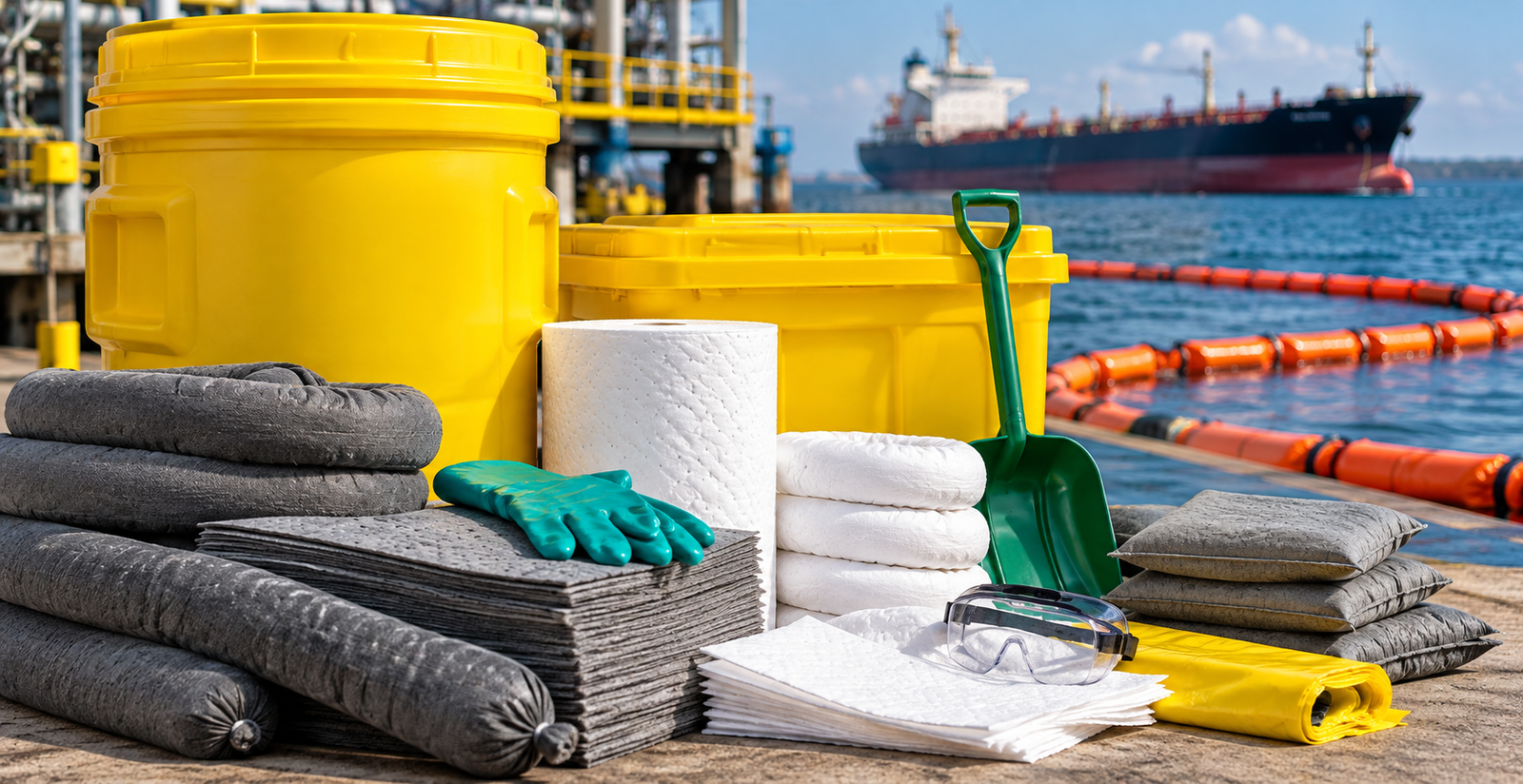
1. Oil Absorbent Pads
Oil absorbent pads are commonly used to absorb oil and other hydrocarbon-based liquids from floors, equipment and other affected surfaces.
They can be useful for maintenance areas, workshops, storage locations and other environments where small oil spills need to be controlled.
The appropriate absorbent should be selected according to the liquid being handled and the manufacturer’s product specifications.
2. Absorbent Rolls and Mats
Absorbent rolls and mats can cover a larger area than individual pads and may be useful where spills or leaks occur repeatedly in a particular work zone.
They can also be positioned around equipment or beneath machinery as part of routine spill-prevention measures.
3. Oil Spill Booms
Spill booms are containment devices designed to help limit the spread of floating oil or other suitable materials on water.
They can be relevant to marine operations, ports, terminals and other locations where a spill could reach a water body.
Containment equipment should be selected according to the environment, expected spill conditions and the manufacturer’s specifications.
4. Spill Kits
A spill kit brings together several response materials in one location so that personnel can respond quickly when a spill occurs.
Depending on the intended application, a spill kit may contain absorbent pads, socks, bags, gloves and other response materials.
The type and size of the kit should match the materials handled at the facility and the potential spill scenarios identified during risk assessment.
5. Absorbent Socks and Booms
Absorbent socks can be positioned around a spill to help prevent the liquid from spreading to surrounding areas.
They can be particularly useful around machinery, storage areas, doorways and other locations where containing the spill is important before the material is absorbed or recovered.
How Does an Effective Spill Response Work?
An effective response should begin with safety.
Before attempting to clean a spill, personnel should identify the substance involved and understand the associated hazards. Where necessary, the area should be isolated and appropriate personal protective equipment used.
A general spill response process may involve:
- Identify the spilled material.
- Assess the immediate hazards.
- Stop the source if it can be done safely.
- Prevent the spill from spreading.
- Protect nearby drains and waterways where appropriate.
- Deploy suitable absorbent or containment materials.
- Collect the contaminated absorbent and recovered material.
- Handle and dispose of the waste according to applicable requirements.
- Report and document the incident where required.
- Review the cause and improve prevention measures.
The exact response procedure should always follow the facility’s emergency plan, the material’s Safety Data Sheet and applicable regulatory requirements.
Spill Control Around Water and Marine Environments
Spills that reach drains, rivers, lagoons, ports or other water environments require particular attention because the material can spread beyond the original point of release.
Containment should therefore be considered as early as possible where a spill threatens a water body.
For marine and port operations, response planning can include suitable containment booms, absorbent materials, recovery equipment and trained personnel.
Nigeria’s national oil-spill response framework is coordinated by NOSDRA, which works with relevant organisations and resources under the National Oil Spill Contingency Plan.
For a significant incident, businesses should follow the applicable reporting and response procedures rather than relying only on routine workplace spill kits.
Oil Spill Control and Environmental Requirements in Nigeria
Spill control is also connected to environmental compliance.
NOSDRA states that it coordinates oil-spill response activities throughout Nigeria and receives reports of oil spillages.
NOSDRA also maintains a product approval process for oil-spill control and remediation products intended for use in Nigeria. Its published process includes product submission, toxicity and efficacy testing and issuance of approval subject to the required laboratory results.
This means businesses should not assume that any oil-spill chemical or remediation product can automatically be deployed in every situation.
Where a spill-control product is intended for regulated oil-spill response, buyers should confirm the applicable approval and regulatory requirements for that product and use case.
How to Choose Spill Control Products
Identify the Material
The first step is to identify what has been spilled.
Oil, fuel, chemicals and water-based liquids can require different absorbent or containment solutions.
Consider the Spill Location
A spill inside a workshop has different containment requirements from a spill near a drain, shoreline, river, port or marine vessel.
Consider the surrounding environment before selecting the response equipment.
Estimate the Potential Spill Volume
The size of the spill kit or amount of absorbent material required should be related to the potential spill volume and the risks associated with the facility’s operations.
Small maintenance areas may require compact kits, while larger industrial facilities may need multiple spill stations and additional containment equipment.
Check Product Compatibility
Absorbent materials should be selected according to the liquid they are intended to absorb.
Always check the manufacturer’s specifications and application recommendations before using an absorbent or chemical spill-control product.
Consider Storage and Accessibility
Spill response equipment is only useful if personnel can access it quickly.
Spill kits and absorbents should be stored in clearly identified and accessible locations close to areas where spills are most likely to occur.
Spill Prevention Is Better Than Waiting for an Incident
Spill control should not begin only after a spill has already occurred.
Businesses can reduce risk by inspecting tanks, pipes, hoses, containers and transfer points regularly.
Good housekeeping, proper storage, clear operating procedures and routine equipment maintenance can also help reduce the likelihood of leaks and spills.
Facilities that handle significant quantities of oil or chemicals should also consider emergency response planning and regular staff training.
Spill Control Products for Industrial and Marine Operations
Morven Industrial supplies industrial products and equipment for customers working across marine, oil and gas, manufacturing and other industrial sectors.
For related industrial requirements, customers can explore Morven’s chemical products and industrial tools and equipment.
For marine and industrial coating requirements, Morven also supplies marine and protective coating products for demanding operating environments.
The appropriate spill-control product should always be selected according to the material involved, spill scenario, operating environment and relevant technical and regulatory requirements.
What Should Be in a Spill Response Plan?
A practical spill response plan should identify the materials handled at the facility, the locations where spills could occur and the actions employees should take when an incident happens.
It can include:
- Potential spill sources
- Types of materials handled
- Emergency contact information
- Spill kit locations
- Required personal protective equipment
- Containment procedures
- Cleanup procedures
- Waste handling arrangements
- Reporting procedures
- Staff training and emergency drills
The plan should be reviewed periodically and updated when operations, equipment or regulatory requirements change.
Oil Spill Control Products in Nigeria
Effective spill control combines prevention, preparedness, containment, recovery and appropriate waste management.
For businesses handling oil, fuel or chemicals, having suitable spill response products available can help personnel respond quickly to leaks and minimise the spread of the released material.
For larger oil-spill incidents, the response may require specialised equipment, trained response personnel and coordination with the relevant authorities.
If you are sourcing oil spill control products in Nigeria, contact Morven Industrial with details of the material you handle, your facility or operating environment and the type of spill response equipment you require.
Morven Industrial can discuss available spill-control products and supply requirements based on your application.
Posts Widget
-
1

-
2
-
3

-
4