
Epoxy Resin and Hardener in Nigeria: Uses, Types and Sourcing Guide
Epoxy Resin and Hardener in Nigeria: Uses, Types and Sourcing Guide
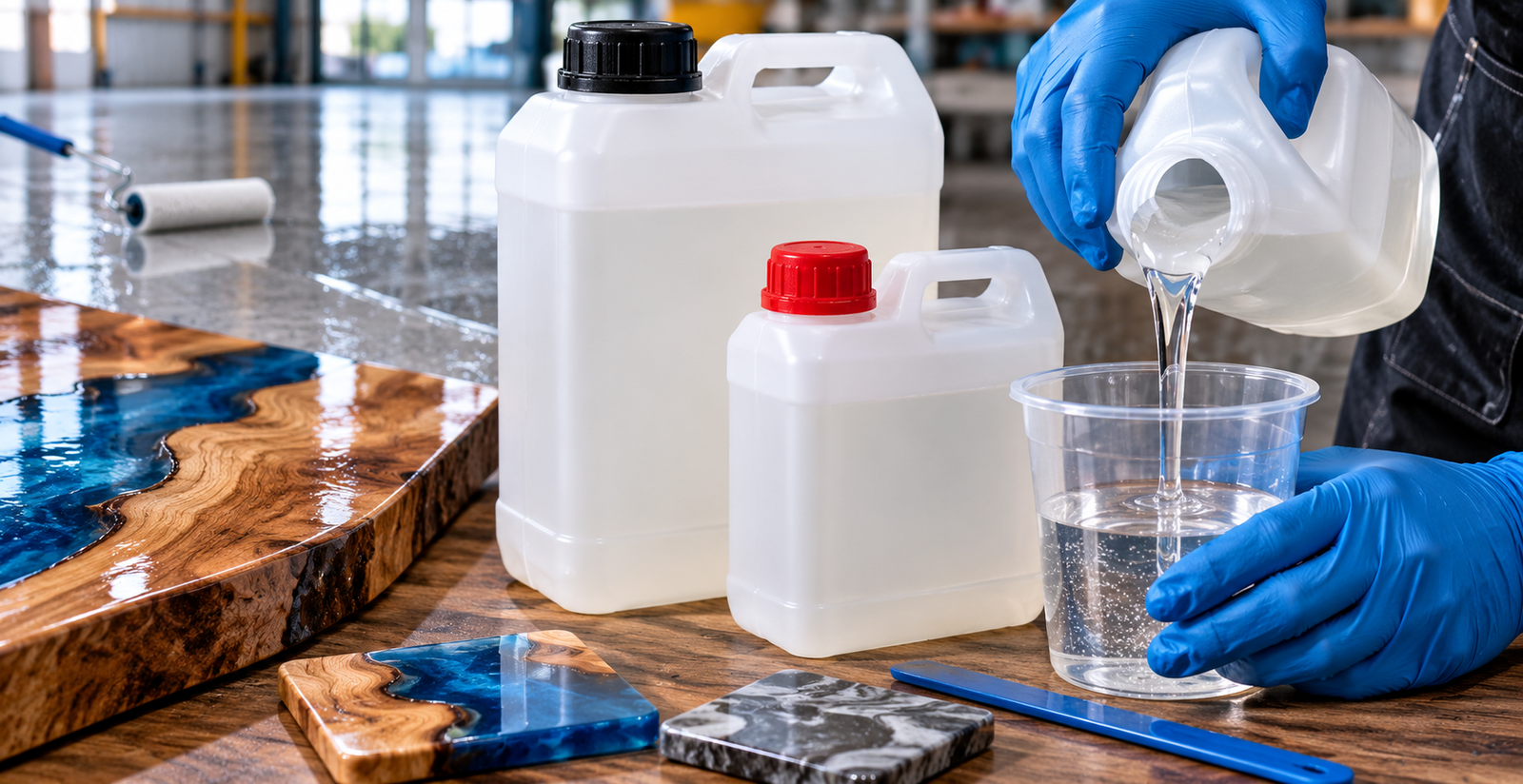
Epoxy resin systems are widely used in industrial coatings, adhesives, flooring, composites and other applications where strong adhesion, durability and resistance to demanding environments are required. An epoxy system normally consists of a resin component and a curing component, commonly referred to as a hardener.
For businesses and contractors looking for epoxy resin and hardener in Nigeria, it is important to understand that epoxy products are not all formulated for the same purpose. The correct resin, hardener or finished epoxy coating depends on the application, substrate, environment and performance requirements.
Epoxy technology is particularly relevant to protective coating applications. Morven Industrial’s current range includes epoxy primers, epoxy mastics, high-build epoxy coatings, epoxy tank linings and other protective coating products from manufacturers including PPG, International Paint, Hempel and Jotun.
This guide explains what epoxy resin and hardener are, how epoxy systems work, where they are used and what buyers should consider when sourcing epoxy materials and protective coatings in Nigeria.
What Is Epoxy Resin?
Epoxy resin is a type of thermosetting polymer material containing reactive epoxy groups. When an epoxy resin is combined with a compatible curing agent, a chemical reaction takes place and the material forms a cross-linked structure.
This cured structure is one of the reasons epoxy systems are used in applications where adhesion, mechanical strength, wear resistance, durability and resistance to certain chemicals are important.
Epoxy resin can be formulated for many different applications. A resin intended for an industrial protective coating is not necessarily the same material used for an adhesive, composite or decorative application.
For this reason, buyers should identify the intended application before selecting an epoxy resin or hardener.
What Is an Epoxy Hardener?
An epoxy hardener, also called a curing agent, is the component that reacts with the epoxy resin to form the cured material.
Different epoxy systems can use different types of curing chemistry, and the resin-to-hardener ratio depends on the specific formulation.
This is why an epoxy hardener should not be treated as a universal product that can be mixed with any epoxy resin. The resin and curing component must be compatible and used according to the manufacturer’s technical documentation.
For example, Morven’s PPG SigmaCover 280 is a two-component epoxy coating with a specified base-to-hardener mixing ratio of 80:20 by volume. The product information also states that the mixed components should preferably be above 15°C before application.
These requirements are specific to the product and should not be applied to unrelated epoxy systems.
How Does an Epoxy Resin and Hardener System Work?
When the resin and compatible curing agent are combined in the correct proportions, they react and form a cross-linked polymer network. The material changes from the mixed state into a cured solid with properties determined by its formulation and curing conditions.
The final properties of an epoxy system depend on factors such as the resin chemistry, curing agent, formulation, fillers and additives, mixing ratio, temperature and curing conditions.
For industrial applications, the manufacturer’s technical data sheet should therefore be treated as the primary reference for mixing, application and curing requirements.
Common Applications of Epoxy Resin
Epoxy resin technology is used across several industries because formulations can be developed for different performance requirements.
Industrial Protective Coatings
Epoxy coatings are widely used to protect steel and other suitable substrates from environmental exposure and corrosion.
Morven Industrial’s Painting and Protective Coating category includes a range of epoxy products for industrial and marine protective coating systems.
Marine Coatings
Marine structures and vessels can be exposed to moisture, seawater, corrosion and mechanical wear. Epoxy coatings can form part of protective coating systems designed for particular marine areas and service conditions.
For example, PPG SigmaCover 350 is listed as a two-component, high-build polyamide-cured anticorrosive epoxy primer/coating for marine and protective coating applications including topsides, decks, superstructures and cargo holds.
Industrial Steel Structures
Steel structures in industrial environments can require coating systems that provide protection against corrosion and environmental exposure.
Morven lists PPG SigmaCover 630 as a two-component, surface-tolerant, high-build polyamide-cured epoxy primer/coating. Its listed applications include maintenance coating for dry cargo holds, decks and hulls, as well as protective coating systems for steel and concrete structures exposed to atmospheric land or marine conditions.
Tank Linings
Some epoxy formulations are designed specifically for internal tank and process-equipment lining applications.
Morven’s International Paint range includes Interline 399, described as a two-component epoxy novolac tank lining with high crosslinking and resistance to heat and solvents. The product information lists internal lining of storage and processing containers as an application.
Another example is Interline 850, an epoxy phenolic coating listed for tank lining and suitable applications in new construction or maintenance and repair.
Types of Epoxy Coating Systems
There is no single epoxy coating suitable for every application. Different products are formulated for different roles within a protective coating system.
Epoxy Primers
Epoxy primers are commonly used as part of protective coating systems for steel and other substrates.
PPG Sigmaprime 200 is a universal epoxy anticorrosive primer based on pure epoxy technology. Morven lists it for applications including ballast tanks, decks, topsides, superstructures, hulls, cargo oil tanks and cargo holds.
Epoxy Mastic Coatings
Epoxy mastic products are formulated for specific maintenance and protective coating applications.
Morven lists Jotamastic 90 as a two-component polyamine-cured epoxy mastic coating for repair and maintenance. It is described as surface tolerant, high solids and high build.
High-Build Epoxy Coatings
High-build epoxy coatings are formulated to provide greater film build per application than conventional thin-film systems, subject to the manufacturer’s specified application conditions.
Intergard 475 is listed by Morven as a two-component, high-solids, high-build epoxy finish for environments including offshore structures, petrochemical facilities, pulp and paper facilities and bridges.
Epoxy Tank Linings
Some epoxy products are specifically designed for tank and vessel internal lining applications where resistance to the stored or processed material is an important consideration.
Products such as Interline 399 and Interline 850 are examples of epoxy-based products listed by Morven for specialised lining applications.
Epoxy Resin for Marine and Protective Coatings
Epoxy coatings are often used as part of a complete coating system rather than as an isolated layer.
A protective system may include a primer, intermediate coating and finishing coat. The products selected must be compatible with one another and suitable for the substrate and service environment.
For example, PPG SigmaCover 280 can be overcoated with several coating types, including epoxy and two-component polyurethane coatings, according to its Morven product information.
This is why selecting an epoxy coating should involve consideration of the complete system rather than choosing a product based only on the word “epoxy.”
How to Choose Epoxy Resin and Hardener
1. Identify the Intended Application
Start by determining what the epoxy system will be used for. An epoxy coating, adhesive, composite resin and flooring system may require different formulations.
2. Identify the Substrate
For coating applications, determine whether the substrate is steel, concrete, non-ferrous metal or another material.
The surface condition and required preparation should also be considered before selecting the coating system.
3. Determine the Service Environment
Consider where the finished system will operate. A marine environment, chemical plant, warehouse, tank interior and general industrial structure can expose the coating to very different conditions.
Moisture, seawater, chemicals, abrasion, temperature and weathering can all influence product selection.
4. Confirm Resin and Hardener Compatibility
If you are purchasing separate epoxy resin and hardener components, make sure they are designed to work together.
The manufacturer’s specified mixing ratio should be followed exactly. A different ratio can change curing behaviour and final performance.
5. Check Surface Preparation Requirements
Epoxy coatings depend heavily on appropriate surface preparation. The surface should be prepared according to the product manufacturer’s requirements before application.
Preparation requirements can vary depending on the substrate, existing coating and intended service environment.
6. Check Application and Curing Conditions
Temperature, humidity, mixing time, pot life, application method and curing conditions can affect the performance of an epoxy system.
Always review the current technical data sheet before mixing or applying a two-component epoxy product.
Why the Correct Resin-to-Hardener Ratio Matters
The resin and hardener in a two-component epoxy system are formulated to react in a particular proportion. Changing that proportion can affect the curing process and the properties of the finished material.
For example, PPG SigmaCover 280 has a base-to-hardener ratio of 80:20 by volume, or 4:1. That ratio belongs specifically to the SigmaCover 280 system and should not be applied to other epoxy products.
Different epoxy products can have different mixing ratios, curing agents and application requirements. Always use the manufacturer’s technical documentation for the product being applied.
Epoxy Resin vs Epoxy Coating
Epoxy resin and epoxy coating are related terms, but they do not necessarily refer to the same finished material.
An epoxy resin can be a base material used in the formulation of different products. An epoxy coating is a formulated system designed to be applied to a particular substrate for a specified protective or decorative purpose.
This distinction matters when sourcing epoxy materials. A manufacturer looking for raw epoxy resin and curing agents may have different requirements from a contractor looking for a ready-formulated epoxy protective coating.
Morven Industrial’s current catalogue is particularly strong in formulated epoxy protective coatings, primers, mastics and tank lining products.
Epoxy Products Available From Morven Industrial
Morven Industrial currently lists a range of epoxy-based protective coating products from several coating manufacturers.
- PPG SigmaCover 280 – universal epoxy anticorrosive primer for protective coating systems.
- PPG SigmaCover 350 – high-build epoxy primer/coating for marine and protective coating applications.
- PPG SigmaCover 630 – surface-tolerant high-build epoxy primer/coating for specified maintenance and protective coating applications.
- PPG Sigmaprime 200 – universal epoxy anticorrosive primer.
- Jotamastic 90 – two-component epoxy mastic coating for repair and maintenance.
- Intergard 475 – high-build epoxy finish for specified industrial environments.
- Interline 399 – epoxy novolac tank lining.
- Interline 850 – epoxy phenolic coating for specified tank-lining applications.
These are formulated coating products rather than a generic catalogue of raw epoxy resin and hardener components. If you require raw epoxy resin or a specific curing agent for manufacturing or formulation, provide the exact specification when making an enquiry so availability and compatibility can be confirmed.
Epoxy Resin and Hardener Supplier in Nigeria
When sourcing epoxy resin, hardener or finished epoxy coating products in Nigeria, it is useful to provide the supplier with the exact application and material requirements.
For raw resin and hardener requirements, provide the product specification, manufacturer reference, intended use, required properties and quantity where available.
For protective coating projects, provide information about the substrate, operating environment, surface preparation, existing coating system and intended application.
This information helps distinguish between a raw epoxy material and a ready-formulated epoxy coating system.
Epoxy Coatings for Industrial and Marine Applications
Epoxy coatings are commonly considered for applications where protection against corrosion, water, chemicals, abrasion or other environmental conditions is required, depending on the formulation.
For marine steel, epoxy primers and buildcoats can form part of a coating system designed for particular vessel areas. For industrial facilities, epoxy coatings may be specified for structural steel, tanks, equipment and other suitable substrates.
Morven’s Painting and Protective Coating category contains epoxy products from PPG Sigma, International Paint, Hempel and Jotun.
For more information about marine corrosion, read Why Saltwater Accelerates Corrosion in Nigeria’s Marine Environment.
You can also read our guide on protecting coastal steel structures from corrosion in Nigeria.
Where to Buy Epoxy Resin and Hardener in Nigeria
If you are looking for epoxy materials in Nigeria, Morven Industrial supplies industrial, marine and protective coating products, including a range of formulated epoxy coatings.
Customers can browse the Painting and Protective Coating category to view available epoxy primers, mastics, tank linings and other protective coating products.
If your requirement is specifically for raw epoxy resin and hardener, provide the required material specification when contacting Morven Industrial so the appropriate product can be confirmed.
Epoxy Resin Supplier in Lagos, Nigeria
Morven Industrial Limited is based in Apapa, Lagos, and supplies industrial, marine, chemical and protective coating products to customers in Nigeria.
For epoxy coating projects in Lagos or elsewhere in Nigeria, customers can provide details about the substrate, project environment, required coating system and approximate quantity when requesting product information.
For raw epoxy resin and hardener requirements, the exact formulation or product specification should be provided where available.
Request Epoxy Resin, Hardener or Epoxy Coating Products
If you need epoxy resin, hardener or a formulated epoxy coating for an industrial, marine, construction or maintenance application, contact Morven Industrial with your project requirements.
Browse the Painting and Protective Coating category to explore the current epoxy product range, or use the Morven Industrial contact page to send an enquiry.
For two-component epoxy products, always follow the manufacturer’s technical data sheet, mixing ratio, surface preparation requirements, application procedure, curing conditions and safety instructions.
Posts Widget
-
1

-
2
-
3
-
4


One thought on “Epoxy Resin and Hardener in Nigeria: Uses, Types and Sourcing Guide”
Pingback: Epoxy Paint vs Traditional Paint: Differences & Uses | Morven