
Why Saltwater Accelerates Corrosion in Nigeria’s Marine Environment
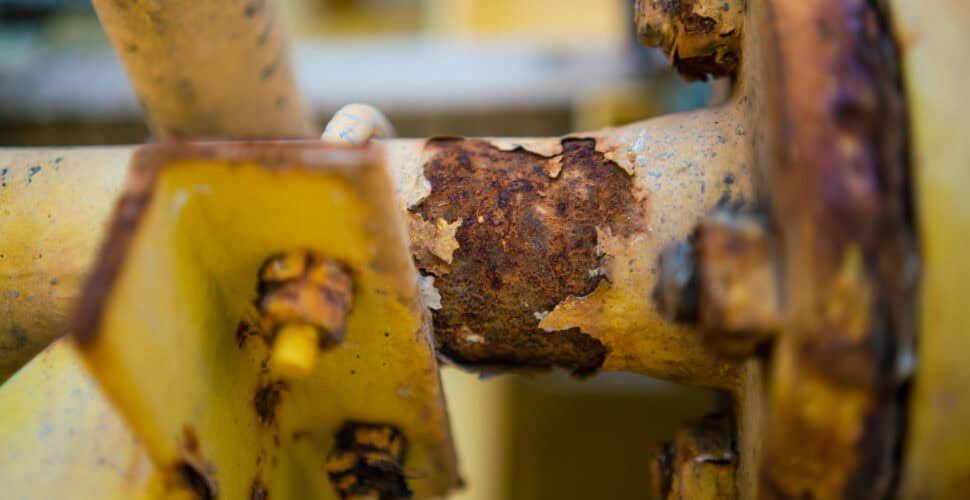
Nigeria’s coastline supports important marine, industrial, oil and gas, and commercial activities. From ports and terminals to vessels, pipelines, storage tanks and steel structures, many assets operate in environments where moisture and salt are constantly present.
For steel, this exposure can create a serious corrosion challenge.
Saltwater does not simply make steel wet. The salts dissolved in seawater help create an environment in which the electrochemical reactions responsible for corrosion can occur more readily. Research into coastal marine steel corrosion has also examined Nigerian coastal exposure and found a relationship between atmospheric salinity and steel corrosion.
Understanding why this happens is important for companies responsible for maintaining marine and coastal assets.
What Is Saltwater Corrosion?
Saltwater corrosion is the deterioration of metal caused by exposure to a marine environment containing water, oxygen and dissolved salts.
Steel naturally reacts with its surrounding environment. When moisture and oxygen reach an unprotected steel surface, electrochemical corrosion reactions can begin. The presence of dissolved salts makes the environment more conductive and can support the corrosion process.
In a marine environment, corrosion can affect areas that are:
- Continuously exposed to seawater
- Exposed to salt spray
- Located near the shoreline
- Subject to repeated wetting and drying
- Exposed to humid marine air
- Located around ports and marine facilities
The severity depends on the specific environment and exposure conditions.
Why Does Saltwater Accelerate Steel Corrosion?
1. Saltwater Contains Chlorides
One of the major concerns in marine environments is the presence of chloride ions.
Chlorides can contribute to localized corrosion and can penetrate or undermine protective films on metal surfaces. Research on coastal marine steel corrosion identifies salinity and chloride exposure as important factors in marine corrosion behaviour.
This is one reason steel structures exposed to seawater and salt-laden air require appropriate corrosion protection.
2. Saltwater Acts as an Electrolyte
Corrosion is an electrochemical process.
Salt dissolved in water increases the water’s ability to conduct electrical charge, supporting the electrochemical reactions involved in corrosion. AMPP identifies saltwater as a particularly important corrosion environment because it supports the electrochemical conditions in which corrosion can develop.
This is why simply allowing salt deposits to remain on exposed steel can contribute to corrosion problems.
3. Humidity Keeps Surfaces Moist
Nigeria’s coastal environment can experience high humidity and frequent moisture exposure.
A thin layer of moisture on a steel surface can provide the conditions needed for corrosion reactions. When salt is present in that moisture, the corrosion environment becomes more aggressive.
This makes marine and coastal steel different from steel operating in a dry, controlled indoor environment.
4. Repeated Wetting and Drying Can Be a Problem
Marine structures are not necessarily exposed to seawater continuously.
Some areas may experience cycles of:
Wet → Partially Dry → Wet Again
These repeated exposure cycles can contribute to coating deterioration and corrosion, particularly around splash and waterline areas.
Marine corrosion guidance recognises that different areas of a vessel or coastal structure can experience different exposure conditions, which means the protection system should be selected according to the service environment.
Where Is Saltwater Corrosion Commonly Found?
Saltwater corrosion can affect many types of marine and coastal assets.
Ships and Vessels
Ship hulls, decks, tanks and other steel components are exposed to different marine environments throughout their operating life.
Different areas of a vessel can require different coating systems depending on whether they are above the waterline, exposed to splash, submerged or located inside tanks.
Port Equipment
Cranes, loading equipment, steel structures and other port assets can be exposed to salt-laden air and moisture.
Regular inspection and appropriate protective coatings can help manage the corrosion risk.
Pipelines and Storage Tanks
Steel pipelines and tanks operating in coastal or marine environments can also require dedicated corrosion-control measures.
The appropriate solution depends on the product, environment, temperature, exposure and operating conditions.
Coastal Steel Structures
Bridges, platforms, supports, frameworks and other steel structures located near the coast can be exposed to airborne salt and humidity.
Research on marine atmospheric corrosion has specifically examined the relationship between airborne salinity and steel corrosion, including historical exposure studies conducted along the Nigerian coast.
How Can Saltwater Corrosion Be Reduced?
Saltwater corrosion cannot be addressed effectively by simply applying any type of paint.
A proper corrosion protection programme considers the environment, surface preparation, coating system, application and maintenance.
1. Prepare the Steel Surface Properly
Surface preparation is one of the most important stages of a protective coating project.
Before coating, contaminants such as rust, oil, grease, salts, dust and loose material need to be addressed according to the requirements of the selected coating system.
A coating applied over a poorly prepared surface may not achieve the expected adhesion or protection.
AMPP identifies surface preparation as a key part of an effective protective coating system for structural steel.
2. Select the Right Marine Coating System
Different marine environments require different levels and types of protection.
A coating system suitable for a relatively controlled environment may not be appropriate for steel exposed continuously to saltwater or aggressive marine conditions.
Protective coating systems can include primers, intermediate coatings and topcoats, depending on the specification and exposure.
Morven Industrial supplies marine and protective coating products from brands including Sigma, International, Hempel and Jotun.
For example, Morven’s PPG SigmaCover 350 is positioned for marine and protective coating applications.
For maintenance and repair applications, Jotamastic 90 is another product in Morven’s range that is positioned for marine and protective environments.
The important point is that the coating should be selected according to the actual project conditions and the manufacturer’s technical requirements.
3. Follow the Manufacturer’s Application Requirements
Even a suitable coating can perform poorly when it is not applied correctly.
Application requirements can include:
- Surface preparation
- Mixing
- Application method
- Coating thickness
- Temperature
- Humidity
- Recoat interval
- Drying or curing conditions
These requirements vary between products.
For this reason, project teams should always follow the relevant technical data sheet for the selected coating rather than relying on a generic application method.
Protective coating performance depends on more than simply choosing a product. Surface preparation, coating selection, application and inspection all form part of the overall corrosion-control process.
4. Inspect Marine Assets Regularly
Corrosion protection should not end when the coating has been applied.
Regular inspection can identify early signs of coating deterioration and corrosion.
Look for:
- Rust staining
- Blistering
- Peeling
- Cracking
- Exposed steel
- Pitting
- Mechanical coating damage
- Corrosion around welds and joints
Early identification gives maintenance teams an opportunity to address the affected area before the problem becomes more extensive.
AMPP also identifies coating inspection and measurement as important parts of corrosion control and maintenance.
5. Repair Damaged Coatings Early
A protective coating is a barrier between the steel and its environment.
When that barrier becomes damaged, moisture, oxygen and salts can reach the underlying metal.
Small areas of coating damage should therefore be assessed and repaired according to the coating system’s maintenance requirements.
This is particularly important for marine assets that experience mechanical impact, weather exposure, salt spray or continuous operation.
Saltwater Corrosion in Nigeria Requires a Proactive Approach
For companies operating marine and coastal assets in Nigeria, corrosion protection should be part of regular asset management rather than something addressed only after serious rust appears.
A practical corrosion-control approach includes:
- Understanding the exposure environment
- Inspecting the steel condition
- Preparing the surface correctly
- Selecting a suitable protective coating system
- Following the manufacturer’s application requirements
- Inspecting the coating after application
- Repairing coating damage when necessary
- Maintaining the asset regularly
There is no single coating that is automatically suitable for every marine structure. The correct system depends on the exposure conditions, substrate, service requirements and project specification. AMPP similarly emphasises evaluating the service environment before selecting a corrosion protection system.
Marine Corrosion Protection in Nigeria
Saltwater corrosion remains an important consideration for vessels, port facilities, offshore assets, pipelines, tanks and coastal steel structures.
With proper surface preparation, suitable protective coatings, correct application and regular inspection, businesses can take a more proactive approach to managing corrosion.
Morven Industrial supplies marine paints and protective coatings in Nigeria for customers working across marine, industrial, oil and gas and other demanding environments.
If you need help sourcing a suitable marine coating or protective coating for a steel project, contact Morven Industrial with your project requirements and the type of asset that needs protection.
Posts Widget
- 1

- 2

- 3

- 4

