
Epoxy Paint vs Traditional Paint: Key Differences, Uses and How to Choose
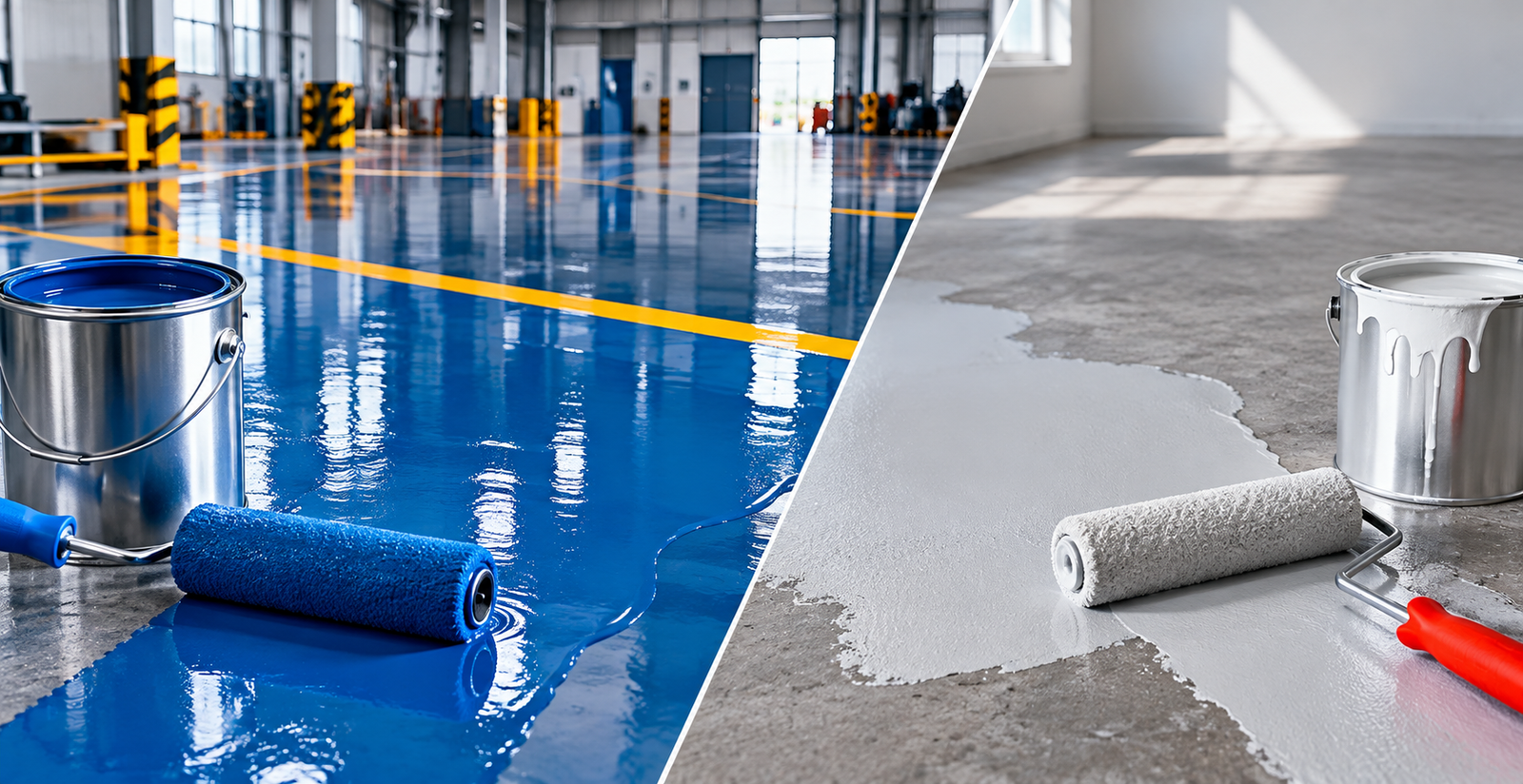
Epoxy Paint vs Traditional Paint: Key Differences, Uses and How to Choose
Choosing the right paint or protective coating can have a major effect on how well a surface performs over time. While traditional paint is suitable for many decorative and general-purpose applications, epoxy-based coatings are often selected when a surface needs stronger protection against corrosion, moisture, chemicals, abrasion or demanding service conditions.
However, epoxy paint is not automatically the right choice for every project. The correct coating depends on the substrate, operating environment, surface condition, expected exposure and the performance required from the finished coating system.
In this guide, we compare epoxy paint vs traditional paint, explain their main differences, discuss common applications and outline the factors to consider before selecting a coating for an industrial, marine, commercial or maintenance project in Nigeria.
What Is Epoxy Paint?
Epoxy paint is an epoxy-based coating system that uses epoxy resin and a curing component to form a durable film after application and curing. Many industrial epoxy products are supplied as two-component systems, meaning the base and curing agent are combined according to the manufacturer’s specified mixing ratio before application.
Once properly cured, an epoxy coating can provide a strong protective barrier between the substrate and the surrounding environment. This makes epoxy systems useful in applications where surfaces may be exposed to moisture, chemicals, abrasion, corrosion or repeated industrial use.
For example, PPG SigmaCover 280 is a universal epoxy anticorrosive primer used in protective coating systems for steel and non-ferrous metals, with applications including decks, topsides, superstructures, hulls and cargo oil tanks.
Another example is PPG SigmaCover 350, a two-component high-build epoxy primer/coating designed for marine and protective coating applications.
What Is Traditional Paint?
The term traditional paint generally refers to conventional paint systems used for decorative, maintenance and general-purpose applications. Depending on the formulation, traditional paints may use different binders, solvents, pigments and additives to produce the required colour, finish, adhesion and durability.
Traditional paints can be suitable where the primary requirements are appearance, colour, general surface protection and straightforward application. They are commonly used on walls, ceilings, woodwork, general metalwork and other surfaces where the exposure conditions are not especially demanding.
However, not all traditional paints have the same performance characteristics. The actual resistance, durability and suitability of a coating depend on its specific formulation and the environment where it will be used.
Epoxy Paint vs Traditional Paint: What Is the Difference?
The main difference is that epoxy coatings are generally selected for performance-oriented protection, while many traditional paints are selected for general-purpose protection and appearance. The difference becomes particularly important when a surface is exposed to corrosion, chemicals, moisture, abrasion or heavy industrial use.
1. Durability
Epoxy coatings are commonly used where a durable protective film is required. Their properties can make them suitable for demanding industrial and marine environments when the correct product and coating system are selected.
Traditional paints can provide good performance in appropriate environments, but a general-purpose paint may not be formulated for the same level of chemical exposure, abrasion or corrosion protection as a dedicated industrial epoxy system.
2. Chemical Resistance
One of the important reasons industrial coating systems use epoxy technology is the resistance that properly formulated epoxy coatings can provide against various chemicals and aggressive environments.
This can be particularly relevant in factories, processing facilities, marine environments, workshops, storage areas and other locations where surfaces may come into contact with chemicals, oils, moisture or industrial contaminants.
Traditional paint may be suitable for normal environmental exposure, but the coating must be checked against the actual chemical and operating conditions before it is selected for an industrial application.
3. Corrosion Protection
For steel structures, corrosion protection is often more important than appearance alone. Protective coating systems work by separating the substrate from environmental exposure and can form an important part of a wider corrosion-control strategy.
AMPP explains that protective coatings can provide barrier protection by limiting the contact of water, oxygen and electrolytes with the underlying metal. The organization also notes that coating systems commonly involve surface preparation followed by primer, coating and, where appropriate, sealant or additional protective layers.
For projects involving steel structures, marine equipment or industrial assets, this means the coating should be considered as part of a complete system rather than simply as a colour finish.
4. Surface Preparation
Both epoxy and traditional paint require suitable surface preparation, but industrial epoxy systems can have more demanding preparation requirements because coating performance depends heavily on the condition of the substrate.
The surface may need to be cleaned, degreased, mechanically prepared, abrasive blasted or otherwise prepared according to the product’s technical data sheet and the required coating system.
For example, Jotamastic 90 is a two-component epoxy mastic coating designed for repair and maintenance applications and can be used on properly prepared steel and other specified substrates.
Always follow the manufacturer’s technical data sheet for surface preparation, mixing, application conditions, dry film thickness and overcoating requirements.
5. Application and Mixing
Many industrial epoxy coatings are supplied as two-component products. The resin/base and curing component must be mixed in the manufacturer’s specified ratio before application.
For example, PPG SigmaCover 280 specifies a base-to-hardener mixing ratio of 80:20 by volume. PPG SigmaCover 350 also specifies an 80:20 mixing ratio.
This is one reason industrial epoxy coatings should be applied by people who understand the product instructions and coating process. Incorrect mixing, inadequate surface preparation or unsuitable application conditions can affect the final performance of the coating.
6. Maintenance Requirements
Maintenance requirements depend on the coating system, exposure conditions, substrate and quality of application. A properly selected protective coating can reduce the frequency of maintenance by providing a durable barrier against the environment.
However, no coating should be treated as maintenance-free. Regular inspection can help identify coating damage, corrosion, mechanical wear, blistering, peeling or other problems before they become more serious.
Where Is Epoxy Paint Commonly Used?
Epoxy coatings are used across a wide range of industrial and protective applications. The exact product should always be selected according to the manufacturer’s stated use and the conditions of the project.
- Steel structures and industrial equipment
- Marine vessels and marine structures
- Decks and superstructures
- Industrial maintenance projects
- Offshore structures
- Petrochemical facilities
- Bridges and structural steel
- Storage and processing environments
- Concrete and selected industrial surfaces
- Areas requiring additional corrosion protection
Morven Industrial’s Painting and Protective Coating catalogue includes epoxy-based products from manufacturers such as PPG, International Paint and Jotun, alongside other protective coating systems.
Examples of Industrial Epoxy Coatings Available from Morven Industrial
Morven Industrial’s protective coating range includes several epoxy products designed for different applications and coating-system requirements.
PPG SigmaCover 280
PPG SigmaCover 280 is a universal epoxy anticorrosive primer based on pure epoxy technology. It is specified for protective coating systems involving steel and non-ferrous metals and has marine applications including decks, topsides, superstructures, hulls and cargo oil tanks.
PPG SigmaCover 350
PPG SigmaCover 350 is a two-component, high-build polyamide-cured epoxy primer/coating for marine and protective coating applications. Its listed uses include topsides, decks, superstructures and cargo holds.
Jotamastic 90
Jotamastic 90 is a two-component polyamine-cured epoxy mastic coating designed primarily for repair and maintenance. It can be used as a primer, midcoat, finish coat or single-coat system in specified atmospheric and immersed environments.
Intergard 475
Intergard 475 is a two-component high-solids, high-build epoxy finish used as part of anticorrosive coating systems. Its listed environments include offshore structures, petrochemical facilities, pulp and paper factories and bridges.
When Should You Choose Traditional Paint?
Traditional paint can still be the appropriate choice when the project does not require the performance characteristics of an industrial epoxy system.
For example, a general decorative project may place greater emphasis on colour, appearance, finish and ease of application than on high chemical resistance or heavy-duty corrosion protection.
The key is not simply choosing the more advanced-sounding product. The coating should match the actual conditions of the surface and the environment.
How to Choose Between Epoxy and Traditional Paint
Before selecting a coating, consider the following questions:
- What surface are you coating? Steel, concrete, wood and other substrates may require different coating systems.
- Where will the surface be used? Marine, offshore, industrial, commercial and residential environments have different exposure conditions.
- Will the surface be exposed to chemicals? Check the coating’s chemical resistance against the substances involved.
- Will there be heavy abrasion or traffic? Areas exposed to mechanical wear may require a more durable protective system.
- Is corrosion protection required? Steel exposed to moisture and aggressive environments may require a properly designed anticorrosive coating system.
- What surface preparation is required? Always check the manufacturer’s preparation requirements before starting the project.
- How will the coating be applied? Consider spray, brush or roller application and whether the product requires specialist equipment or trained applicators.
- What is the complete coating system? A primer, intermediate coat and topcoat may be required rather than a single paint product.
Epoxy Paint Is Not Always a Single-Coat Solution
One common mistake is to think of epoxy paint as simply a stronger version of ordinary paint. In industrial projects, the coating system is often more important than the name of the individual product.
A complete system may involve surface preparation, primer, intermediate coating and finish coat. The products must be compatible and applied according to the manufacturer’s specifications.
This is particularly important for marine and industrial assets where corrosion protection, chemical exposure, immersion, abrasion and weathering may all need to be considered.
If you are dealing with corrosion on coastal or marine steel, you may also find our guide on how to prevent corrosion on coastal steel structures in Nigeria useful. You can also learn more about saltwater corrosion in Nigeria’s marine environment and the role of protective coating systems.
Epoxy Paint vs Traditional Paint: Which One Should You Use?
There is no single coating that is suitable for every project. Epoxy coatings are commonly considered where stronger protection against corrosion, chemicals, moisture and mechanical wear is required, while traditional paints may be appropriate for general-purpose decorative and maintenance applications.
The final selection should be based on the substrate, environment, exposure conditions, expected service requirements, surface preparation and the manufacturer’s technical recommendations.
For industrial and marine projects, it is especially important to select a complete coating system rather than choosing a product based only on colour or price.
Get the Right Protective Coating for Your Project
Morven Industrial supplies a range of paints and protective coating products for marine, industrial and maintenance applications in Nigeria. Our catalogue includes epoxy primers, epoxy mastic coatings, high-build epoxy systems and other protective coating technologies from established coating manufacturers.
Browse our Painting and Protective Coating category to explore available products, or contact Morven Industrial if you need help identifying a coating for your specific application.
For projects involving epoxy resin and hardener systems, you can also read our guide to epoxy resin and hardener in Nigeria.
Before ordering, provide details such as the substrate, location, operating environment, expected exposure and intended application. This helps ensure that the selected coating is suitable for the project requirements.
Posts Widget
-
1

-
2
-
3
-
4